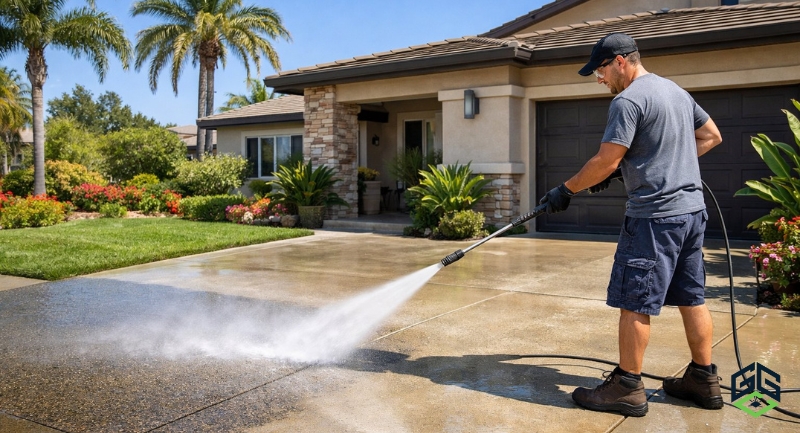
Solar panels need regular cleaning to work at their best, but many San Diego homeowners wonder exactly how often this maintenance should happen. Your location, weather conditions, and surroundings all play a role in determining the right cleaning schedule for your system.
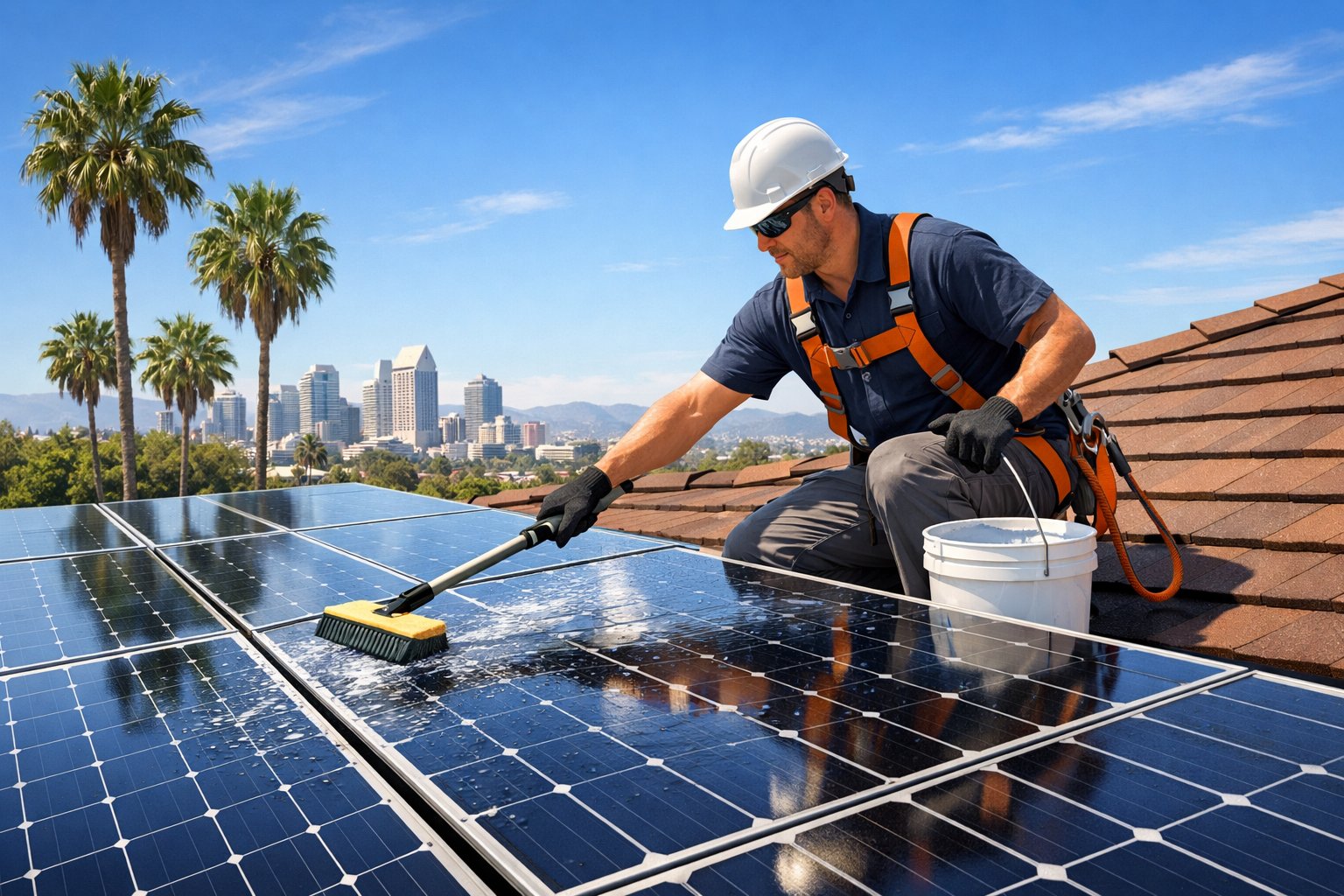
Most solar panel owners in San Diego should clean their panels every three to six months to maintain good energy production. Your panels might need cleaning more often if you live near the coast, highways, or construction sites where dust and debris build up faster. Dirty panels can lose 25-30% of their efficiency, which means less energy and higher electricity bills.
Understanding when and how to clean your solar panels helps protect your investment and keep your energy costs down. This guide covers everything from cleaning schedules and methods to deciding whether to clean panels yourself or hire professionals.
How Often Should You Clean Solar Panels in San Diego?
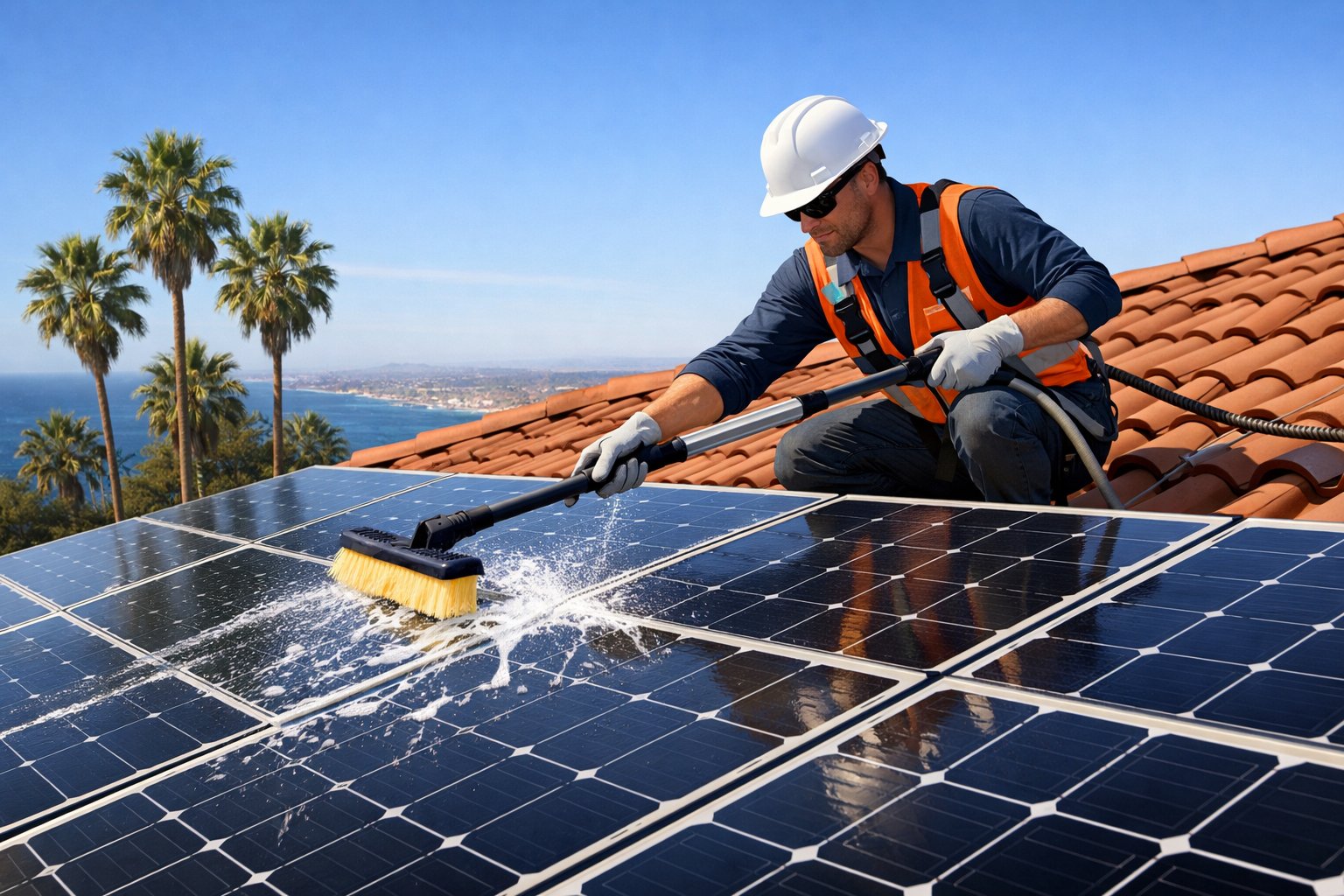
San Diego solar panels typically need cleaning every 6 to 8 weeks during dry seasons, though some systems can go 3 to 6 months between cleanings depending on specific conditions. Your location, weather patterns, and surrounding environment all play important roles in determining the right schedule for your system.
Recommended Cleaning Schedules
Most residential solar panel cleaning in San Diego should happen at least twice per year as a baseline. During the dry season from May to October, you’ll likely need to clean your panels every 6 to 8 weeks to maintain peak performance.
If you live in a coastal area, plan for more frequent cleanings every 1 to 3 months. Salt deposits from ocean air accumulate quickly on panel surfaces and can reduce efficiency faster than standard dust buildup.
Four times per year works well for optimal performance in most San Diego locations. This quarterly approach balances cost with energy output, especially if your panels are near highways or construction zones where pollutants settle regularly.
After wildfire events or major dust storms, schedule an immediate cleaning regardless of your normal routine. Ash and soot can reduce efficiency by up to 30% and won’t wash away naturally.
Factors Influencing Cleaning Frequency
Your panel angle affects how much dirt accumulates. Steeper installations allow rainwater to rinse debris away more easily, while flat or low-angle panels trap more dust and require more attention.
Proximity to pollution sources matters significantly. Panels near busy roads, industrial facilities, or agricultural areas collect grime faster than those in quiet residential neighborhoods.
Bird activity in your area increases cleaning needs. Droppings create stubborn residues that block sunlight and don’t rinse off with rain alone.
Monitor your energy production data regularly. A noticeable drop in output compared to previous months often signals that your panels need cleaning, even if your scheduled maintenance isn’t due yet.
Local Climate and Environmental Impact
San Diego receives less than 20 inches of rain annually, which means your panels don’t get much natural cleaning. The dry climate allows dust and pollen to build up steadily between rainstorms.
Coastal moisture combined with limited rainfall creates ideal conditions for salt deposits. These deposits form a hazy film that gradually blocks sunlight from reaching your photovoltaic cells.
Wildfire season brings ash and particulates that settle on panels across the region. Even if fires aren’t directly nearby, wind carries these materials throughout San Diego County.
The marine layer common in coastal San Diego areas doesn’t clean your panels. While it brings moisture, it’s not enough water pressure to remove accumulated dirt and debris effectively.
Why Regular Solar Panel Cleaning Matters
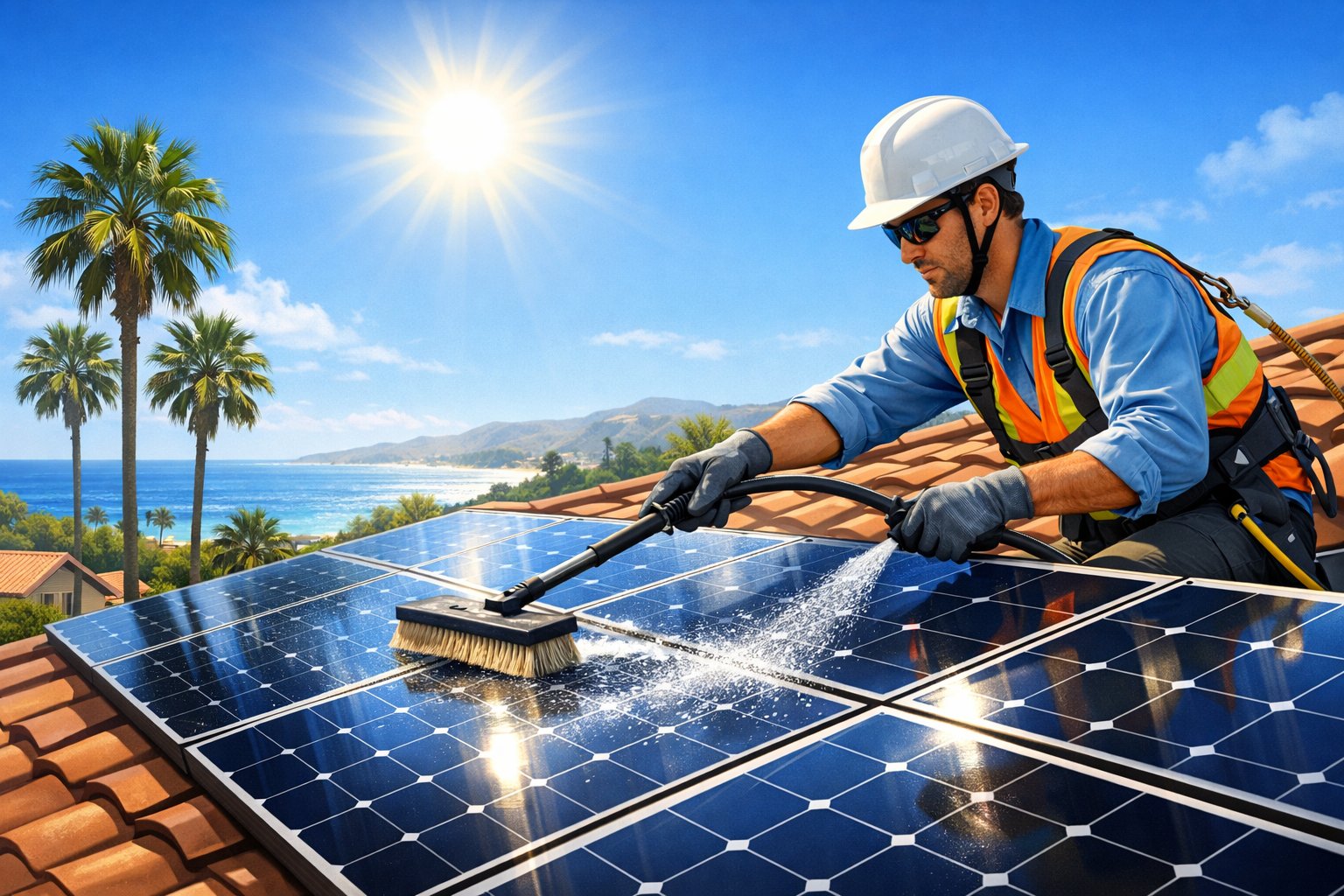
Dirty solar panels directly reduce your energy production and cost you money every month. Understanding how soiling affects your system’s performance and your wallet helps you make smart decisions about maintenance schedules.
Impact on Solar Panel Efficiency
When dirt, dust, pollen, and other debris accumulate on your panels, they create a barrier between sunlight and the photovoltaic cells. This layer blocks photons from reaching the cells, reducing their ability to generate electricity.
Studies show that soiling typically causes energy losses of 3-5% in most conditions. However, this number can climb much higher depending on your environment. In San Diego’s coastal and urban areas, unwashed panels can experience efficiency drops of 15-30%. The loss happens in three ways: dirt blocks incoming sunlight, certain particles increase light reflection away from the cells, and concentrated debris like bird droppings create hot spots that affect entire panel sections.
Salt spray from the ocean is particularly problematic for San Diego homeowners. The salt crystallizes on panel surfaces, forming a hazy film that water alone cannot remove. This coastal soiling requires manual cleaning to restore full power output.
Financial Benefits of Routine Cleaning
Your solar panels represent a major investment. Every percentage point of lost efficiency translates to real money lost each month.
Calculate your potential losses with this formula: multiply your monthly kilowatt-hour production by your efficiency loss percentage, then multiply by your electricity rate. For example, if your system produces 700 kWh monthly, you’re experiencing a 15% efficiency loss, and you pay $0.30 per kWh, you’re losing $31.50 each month. That adds up to $378 per year.
Professional cleaning typically costs between $150-$300 for residential systems. When you recover that much or more in energy production, the service pays for itself. Regular maintenance protects your return on investment and ensures you receive the electricity savings you expected when you installed your system.
Risks of Neglected Solar Panel Maintenance
Skipping regular cleanings causes problems beyond immediate efficiency losses. Abrasive particles like sand create micro-scratches on the glass surface over time. Bird droppings contain acids that can permanently etch the protective coating. These types of damage cannot be reversed, even with thorough cleaning later.
Hot spots from concentrated debris accelerate cell degradation. When leaves or thick dirt cover portions of your panels, the shaded cells heat up while their neighbors continue working. This thermal stress shortens your panels’ lifespan and reduces their long-term performance.
Neglected panels also void certain warranty protections. Many manufacturers require proof of regular maintenance to honor performance guarantees. Without documentation of proper care, you may lose coverage for efficiency-related claims.
Methods for Cleaning Solar Panels
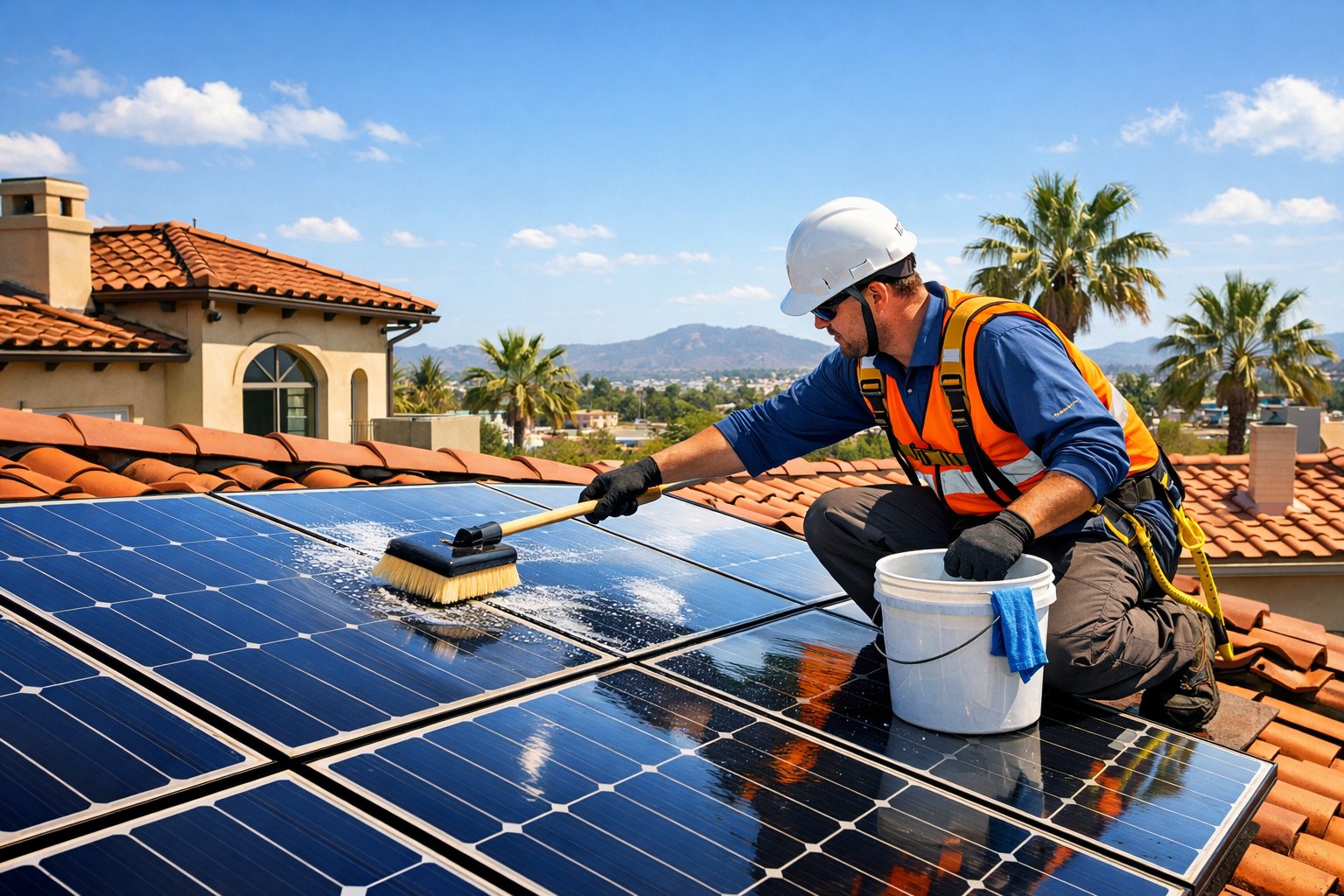
You can clean your panels yourself using basic tools and water, or hire trained professionals who have specialized equipment and insurance. Both approaches work well when done correctly, but each suits different situations and comfort levels.
DIY Solar Panel Cleaning Techniques
You’ll need a few basic supplies to clean your panels safely. Get a soft-bristle brush or squeegee with an extension pole, a bucket of plain water, and a garden hose with a spray nozzle. Never use abrasive materials, pressure washers, or harsh chemicals that can scratch the glass or damage the protective coating.
Start by spraying the panels with water to remove loose dust and debris. This prevents scratching when you scrub. Mix plain water (or water with a small amount of mild dish soap) in your bucket. Use the soft brush to gently scrub the surface in straight motions, then rinse thoroughly with clean water.
Clean your panels early in the morning or late evening when they’re cool. Hot panels can crack from cold water, and cleaning solution evaporates too quickly in direct sunlight, leaving streaks. Only attempt this if you can safely reach your panels from the ground or have proper safety equipment for roof access.
Professional Solar Panel Cleaning Services
Professional cleaners bring specialized tools like deionized water systems, soft-wash equipment, and proper safety gear. They’re insured and trained to work safely on roofs. This protects you from liability if someone gets hurt.
Most professional services charge between $150 and $300 per cleaning, depending on your system size and roof accessibility. Many companies offer maintenance plans with scheduled cleanings throughout the year at discounted rates.
Hire professionals if your panels are difficult to reach, steeply angled, or if you’re uncomfortable working at heights. Professional solar panel cleaning makes sense for larger systems where even small efficiency gains justify the cost. They also spot potential issues like damaged cells, loose connections, or mounting problems during routine maintenance visits.
Best Time to Clean Solar Panels in San Diego
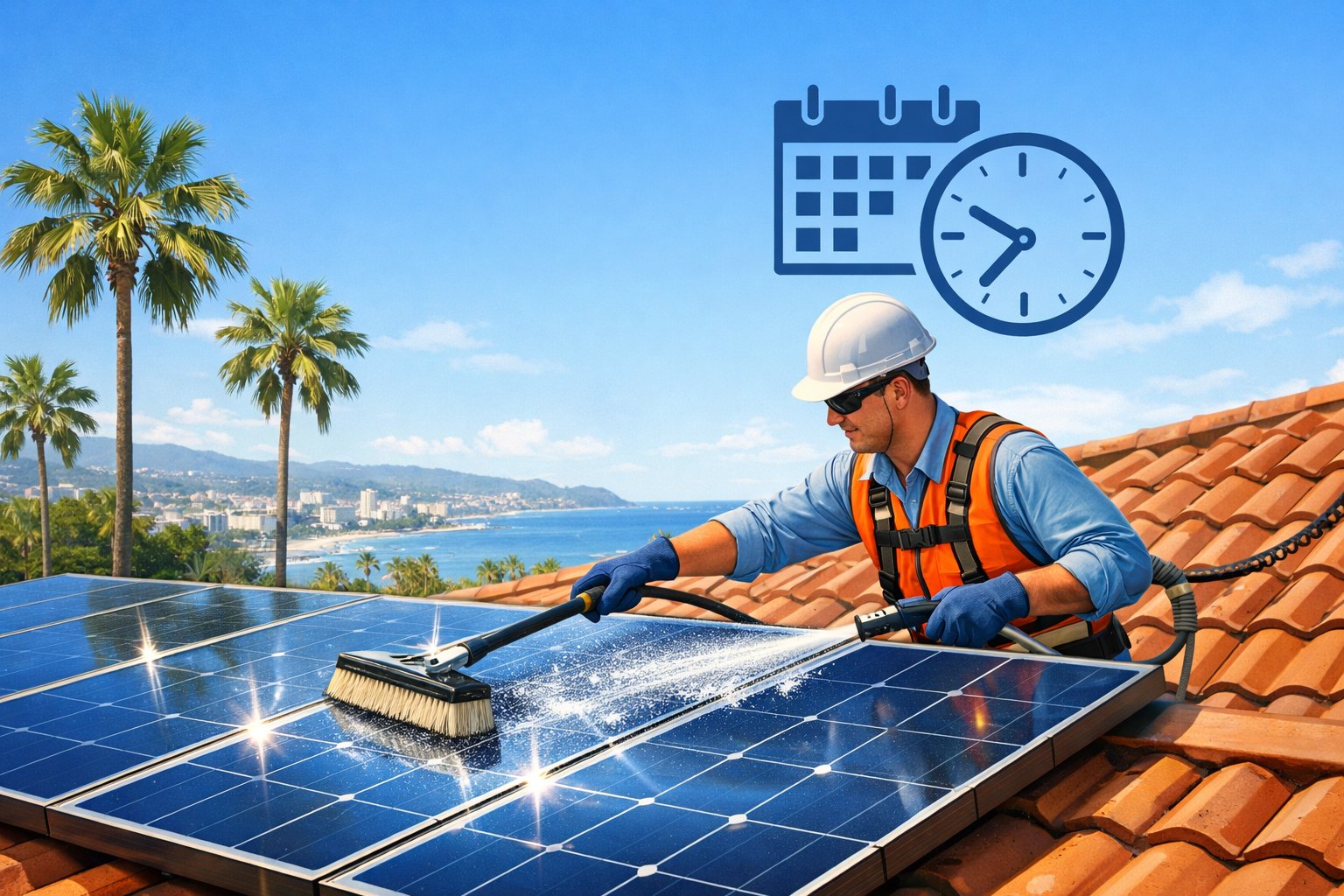
San Diego’s dry season from May through October creates the heaviest dust and salt buildup on solar panels, while cooler morning hours provide the safest and most effective cleaning conditions.
Seasonal Cleaning Recommendations
San Diego experiences two distinct periods that affect your solar panel cleaning schedule. The dry months from May to October bring minimal rainfall and increased dust accumulation, requiring cleaning every 6 to 8 weeks. During these months, coastal salt deposits and inland dust settle quickly on panel surfaces.
The wetter season from November through April provides some natural rinsing from occasional rain. You can extend cleaning intervals to every 3 to 4 months during this period. However, you should schedule an immediate cleaning after wildfire season, which typically runs from June through November, as ash and soot can reduce efficiency by up to 30%.
Optimal Timing for Maximum Efficiency
Early morning or late afternoon offers the best time to clean solar panels. Cleaning during these cooler hours prevents rapid water evaporation that leaves mineral deposits and streaks on your panels. The panels are also cooler to touch, reducing thermal shock risks from cold water on hot surfaces.
Avoid cleaning during peak sun hours between 10 AM and 3 PM. Hot panels can cause cleaning solutions to dry too quickly, leaving residue that blocks sunlight. Morning cleaning also lets your panels dry naturally before peak production hours, maximizing your energy output for the day. Schedule professional solar panel cleaning in San Diego during weekday mornings when companies often offer better availability and competitive rates.
Choosing Between DIY and Professional Cleaning
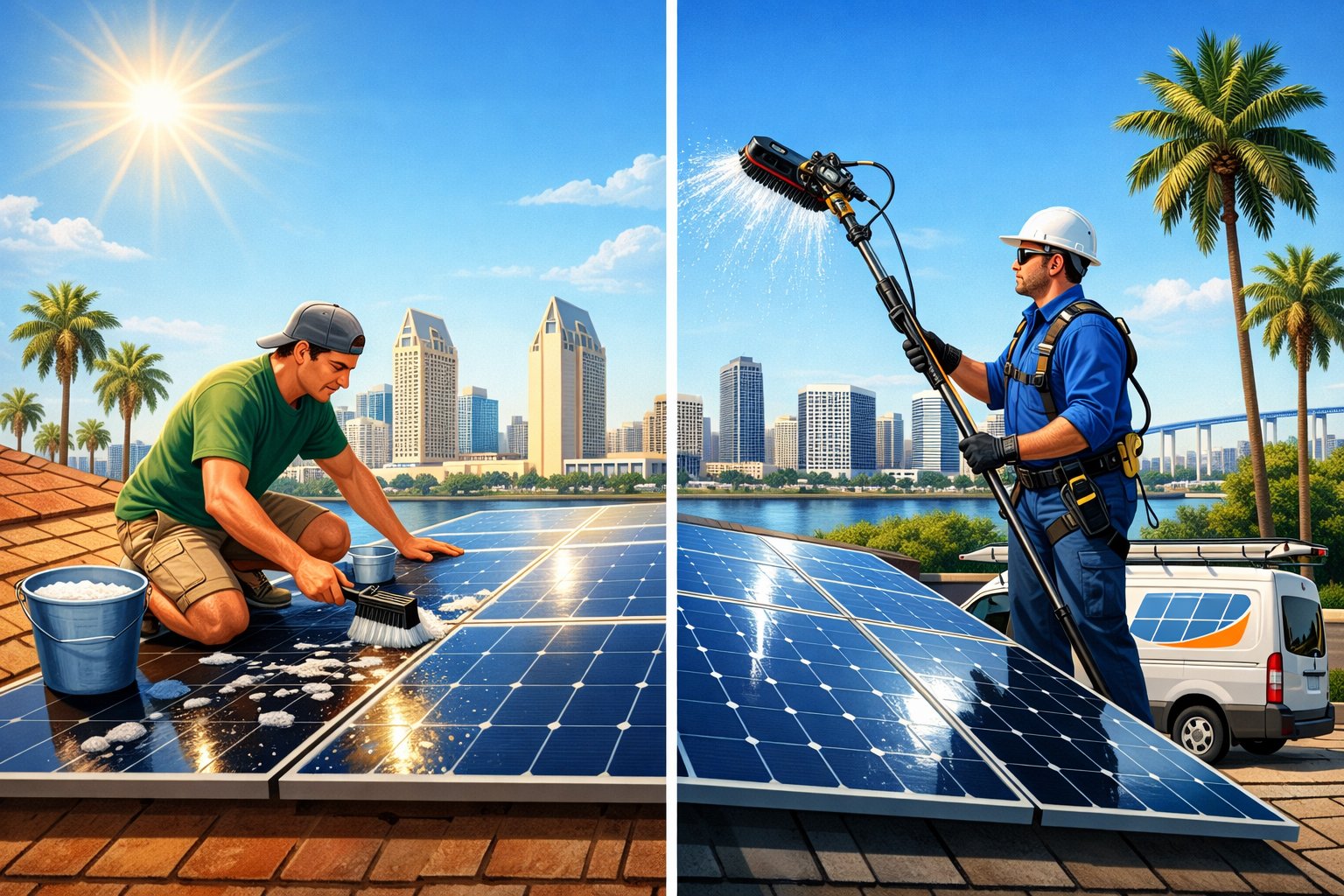
San Diego homeowners face a choice between cleaning panels themselves or hiring trained technicians. Professional services typically cost $150 to $350 but eliminate safety risks and equipment concerns that come with DIY approaches.
Advantages of Hiring Professionals
Professional solar panel cleaning companies bring specialized equipment that most homeowners don’t own. They use water-fed poles with purification systems that produce deionized or reverse osmosis water. This prevents mineral spots that tap water leaves behind.
Safety is the biggest benefit. Professionals have insurance, harnesses, and fall protection gear. They know how to work on roofs without injury risk to you.
Trained technicians can spot problems during solar panel maintenance visits. They notice loose wiring, cracked cells, or pest damage that you might miss. Catching these issues early saves money on repairs.
Professional services provide documentation that proves proper maintenance for your warranty. Many manufacturers require regular cleaning records. If a panel fails and you can’t show proper care, your warranty could be voided.
A trained crew cleans your entire array faster than you can. Their experience means they know the right pressure, tools, and techniques for different panel types. Your solar panel cleaning frequency becomes their responsibility to track and schedule.
Common Mistakes in DIY Cleaning
Using a pressure washer is the most common error. High pressure forces water past seals and damages panels. It can crack protective coatings and ruin the anti-reflective surface.
Spraying cold water on hot panels causes thermal shock. This creates tiny cracks in the glass that reduce efficiency permanently. You must clean early morning or evening when panels are cool.
Household cleaners strip protective coatings. Bleach, ammonia, and strong detergents corrode aluminum frames and damage panel surfaces. Hard-bristled brushes scratch the anti-reflective coating.
Walking on panels breaks cells inside. Even light pressure can cause hidden damage that shows up as reduced output later.
Many people forget to shut down the system first. Your panels generate electricity even on cloudy days. Working near live wires without proper shutdown creates electrocution risk.
Using tap water leaves white mineral deposits that block sunlight. These spots are hard to remove once dried.
Maintaining Solar Panel Performance Between Cleanings
Between scheduled cleanings, you can take simple steps to protect your panels and catch problems early. Monitoring your system’s output and conducting quick visual checks helps you maintain peak efficiency without constant professional intervention.
Regular Inspections and Monitoring
You should check your solar monitoring app weekly to track your system’s energy production. Compare your current output to your established baseline from when the panels were clean. A drop of more than 5% that lasts several days signals potential soiling or technical issues that need attention.
Perform a visual inspection from ground level once a month. Use binoculars to safely check for bird droppings, leaves, or dust buildup without climbing onto your roof. Look for shading from growing tree branches that might reduce solar panel efficiency. San Diego’s mild climate means you can conduct these checks year-round.
Document any significant changes you notice. Take photos of visible debris or areas where dirt accumulates faster. This information helps cleaning professionals target problem areas during service visits.
Long-Term Solar Panel Care Tips
Trim overhanging branches at least twice yearly to reduce leaf debris and bird activity near your panels. This prevents organic matter from accumulating and blocking sunlight.
Keep gutters clean to prevent overflow that splashes dirt onto lower panel rows. Install bird deterrents if you notice frequent droppings affecting your clean energy production.
Schedule your professional cleanings during San Diego’s drier months when dust accumulation peaks. Coordinate solar panel maintenance with your system’s annual inspection to catch both performance and structural issues.
Review your inverter display regularly for error messages. Address any warnings promptly to prevent minor issues from affecting your system’s overall efficiency.