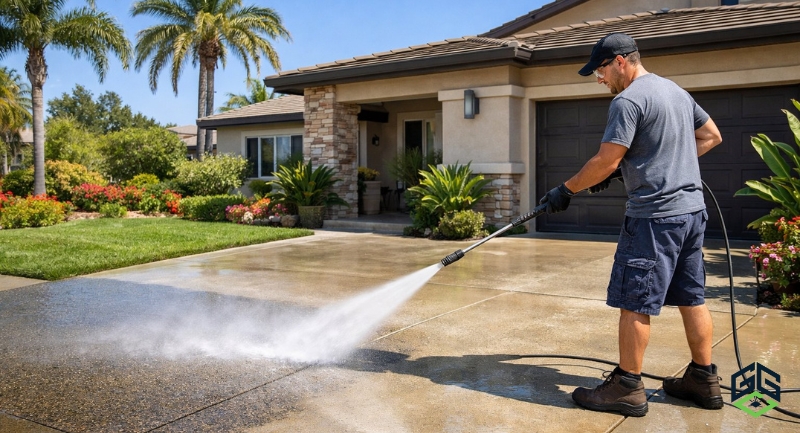
Solar panels need regular cleaning to work at their best, but timing matters just as much as frequency. In San Diego’s unique climate, dust, pollen, coastal salt, and bird droppings can build up quickly on your panels and reduce their energy output. Knowing when to schedule cleanings helps you get the most from your solar investment.
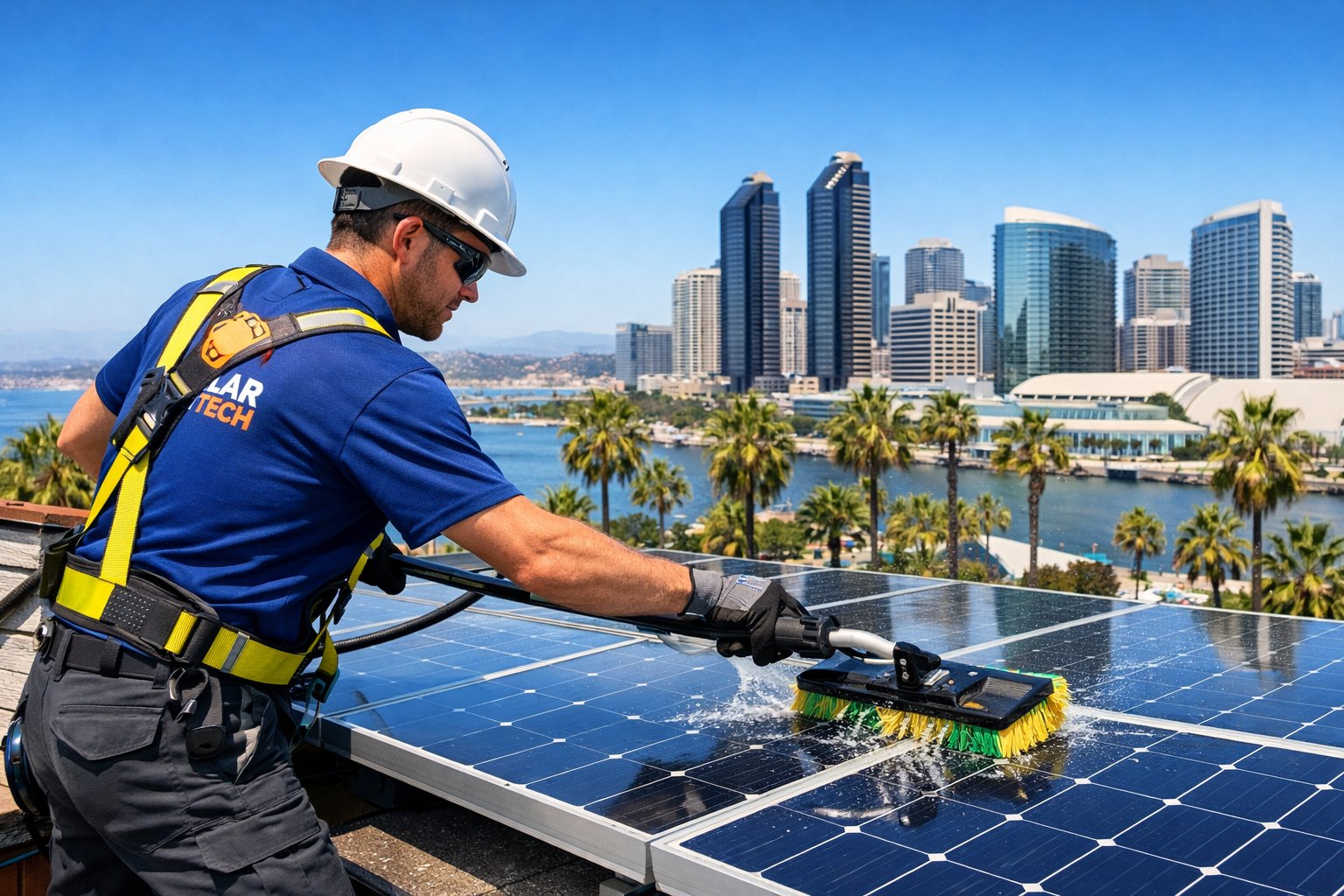
The best times to clean your solar panels in San Diego are early morning or late afternoon when the panels are cool, and ideally during spring and fall when dust and pollen are at their peak. Cleaning during cooler parts of the day prevents water from evaporating too quickly and leaving streaks or mineral deposits. You also need to consider San Diego’s dry climate and seasonal weather patterns when planning your maintenance schedule.
This guide covers everything you need to know about timing your solar panel cleanings, how often you should schedule a service, and whether to tackle the job yourself or hire professionals. For expert service that protects your panels and maximizes their efficiency, Go Greens Clean offers eco-friendly solar panel cleaning throughout San Diego County.
Why Keeping Solar Panels Clean Matters in San Diego
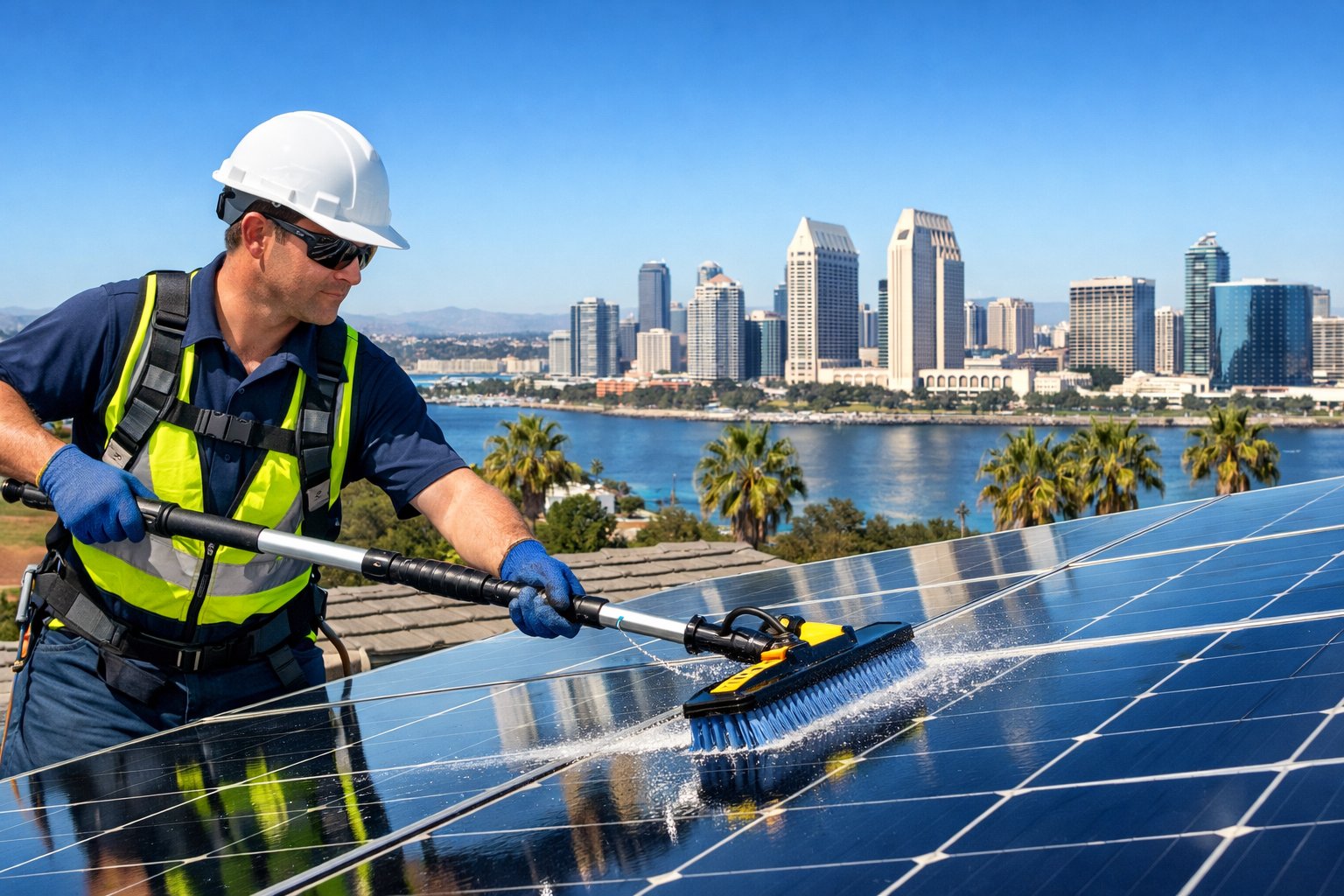
Dirty solar panels can significantly reduce your system’s energy production, costing you money and undermining your investment in clean energy. San Diego’s unique climate creates specific challenges that make regular solar panel maintenance essential for maintaining peak performance.
Impact of Dirt and Debris on Solar Panel Efficiency
When dirt, dust, and debris accumulate on your panels, they block sunlight from reaching the solar cells. This reduces your system’s ability to generate electricity.
Studies show that even a thin layer of grime can decrease solar panel efficiency by 10-30%. Bird droppings, pollen, and everyday dust all contribute to this buildup. Hard water stains from improper cleaning can make the problem worse.
The loss in efficiency directly affects your electricity production. A dirty residential system can lose several hundred kilowatt-hours of output each year. This means you’ll rely more on grid power and pay higher utility bills.
Common contaminants include:
- Dust and dirt particles
- Bird droppings
- Pollen from trees and plants
- Salt deposits from ocean air
Regular solar panel cleaning removes these barriers and restores your system to optimal performance.
Role of San Diego’s Climate and Environment
San Diego’s dry climate and limited rainfall mean natural cleaning rarely happens. Unlike regions with frequent rain, your panels won’t get washed regularly by weather.
Desert dust from inland areas settles on panels throughout the year. Coastal neighborhoods face additional challenges from salt deposits carried by ocean breezes. Urban pollution and smog add another layer of grime.
Construction activity, agricultural areas, and manufacturing plants release particles that drift onto your panels. These environmental factors make San Diego one of the regions where solar panel maintenance matters most.
The combination of abundant sunshine and minimal rain creates ideal conditions for debris buildup. Without regular cleaning, your panels will accumulate more contaminants faster than in many other parts of the country.
Maximizing Solar Energy Output and Utility Savings
Clean solar panels produce more electricity, which means greater savings on your monthly bills. When your system operates at full capacity, you draw less power from the utility company.
The financial impact adds up over time. Moderate dirt buildup causing 15% energy loss can cost you around $125 per year. Severe debris accumulation reducing output by 25% can result in $200 or more in lost savings annually.
Regular cleaning also protects your long-term investment. Many manufacturers require proper solar panel maintenance to keep warranties valid. Neglecting this responsibility could void your coverage and leave you paying for repairs out of pocket.
By scheduling professional solar panel cleaning services, you ensure your system delivers maximum clean energy production year-round. This proactive approach safeguards both your equipment and your financial returns from your solar investment.
Best Time to Clean Solar Panels in San Diego
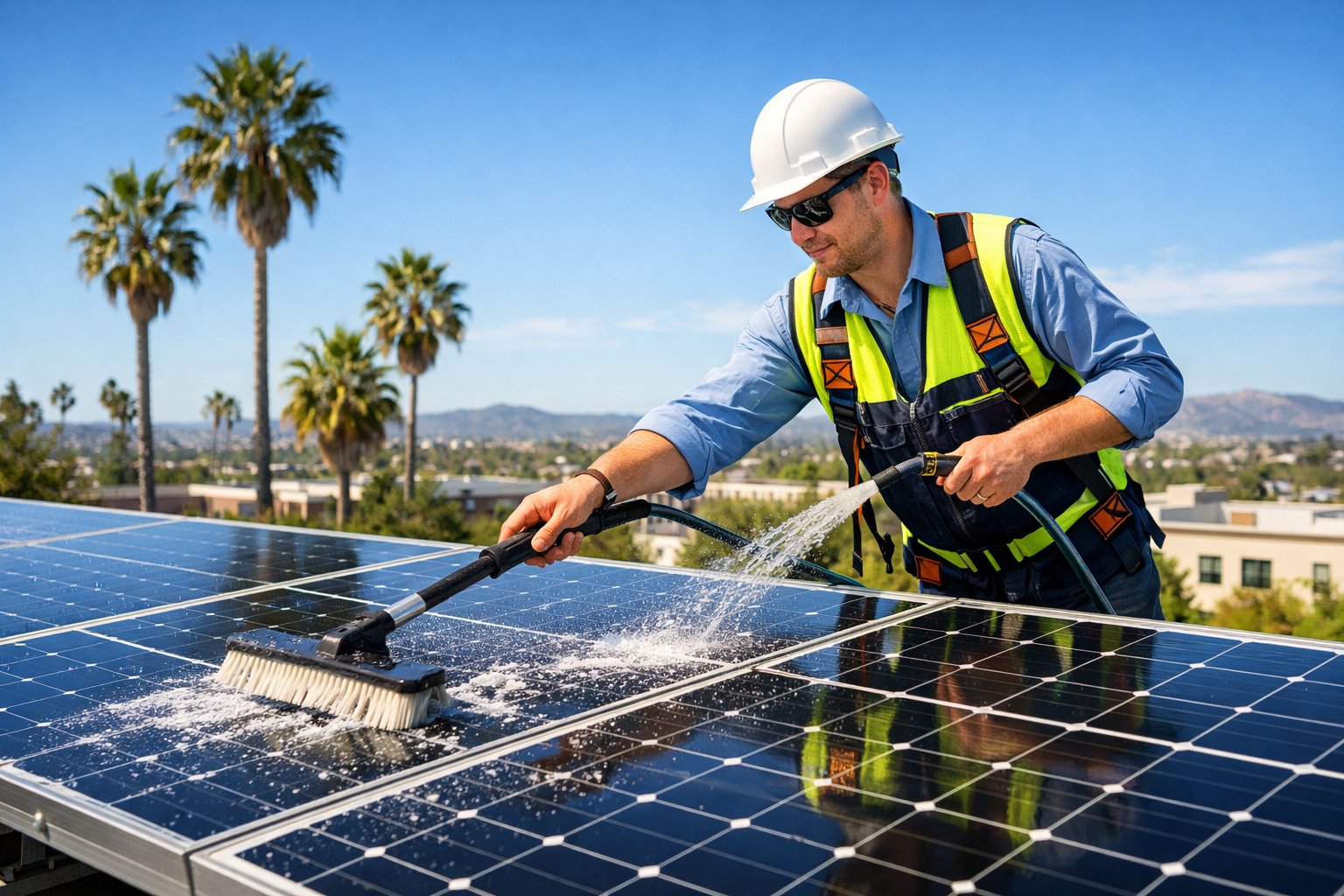
Timing your solar panel cleaning correctly maximizes efficiency and protects your investment. San Diego’s unique climate patterns create specific windows when cleaning delivers the best results for your system’s performance.
Ideal Cleaning Times of Day and Year
Early morning or late afternoon provides the best conditions for cleaning solar panels. During these times, panels remain cool to the touch, which prevents thermal shock from cold water hitting hot surfaces. Cleaning in direct midday sun creates streaks as water evaporates quickly and reduces your visibility of dirt and grime.
Spring (March through May) ranks as the most important season for solar panel cleaning in San Diego. Pollen from blooming plants coats panels during this period, creating a film that blocks sunlight. Summer and fall bring additional challenges from wildfire ash, especially during August through October when fire activity peaks in Southern California.
You should schedule cleanings at least twice yearly, with spring being non-negotiable. Areas near construction sites or agricultural zones may require quarterly service to maintain optimal solar panel efficiency.
Seasonal Considerations for Solar Maintenance
San Diego’s dry climate means natural rainfall rarely cleans your panels adequately. The region receives most precipitation between December and March, but even this limited rain often leaves mineral deposits and doesn’t remove stubborn debris like bird droppings.
Summer months demand attention because high temperatures increase your energy needs while dust accumulation reduces output. Your panels work hardest during this season, making clean surfaces critical for maximum production.
Winter maintenance addresses salt deposits in coastal areas. Ocean breezes carry salt particles that settle on panels, creating a hazy layer. Properties within five miles of the coast face this issue more severely than inland locations.
You’ll notice seasonal variations in debris types. Spring brings pollen and plant material. Summer creates dust buildup from dry conditions. Fall introduces ash from regional wildfires. Winter adds moisture-related residues and salt.
Influence of Local Events and Weather Patterns
Wildfire season significantly impacts when you should clean solar panels. Smoke and ash from fires blanket San Diego County panels, sometimes requiring immediate cleaning solar panels rather than waiting for scheduled maintenance. The 2024 wildfire season showed how quickly ash accumulation reduces energy output by 20-30%.
Santa Ana winds, which typically occur between October and April, blow dust and debris onto panel surfaces. These strong, dry winds carry particles from desert regions directly onto your solar array. Schedule a cleaning within two weeks after major Santa Ana wind events.
Construction activity near your home creates immediate cleaning needs. Sawdust, concrete dust, and other fine particles settle on panels daily during nearby projects. Solar panel maintenance becomes weekly rather than seasonal in these situations.
Go Greens Clean offers professional service that accounts for these local factors, providing customized scheduling based on your specific San Diego microclimate and environmental conditions.
How Often Should You Clean Your Solar Panels?
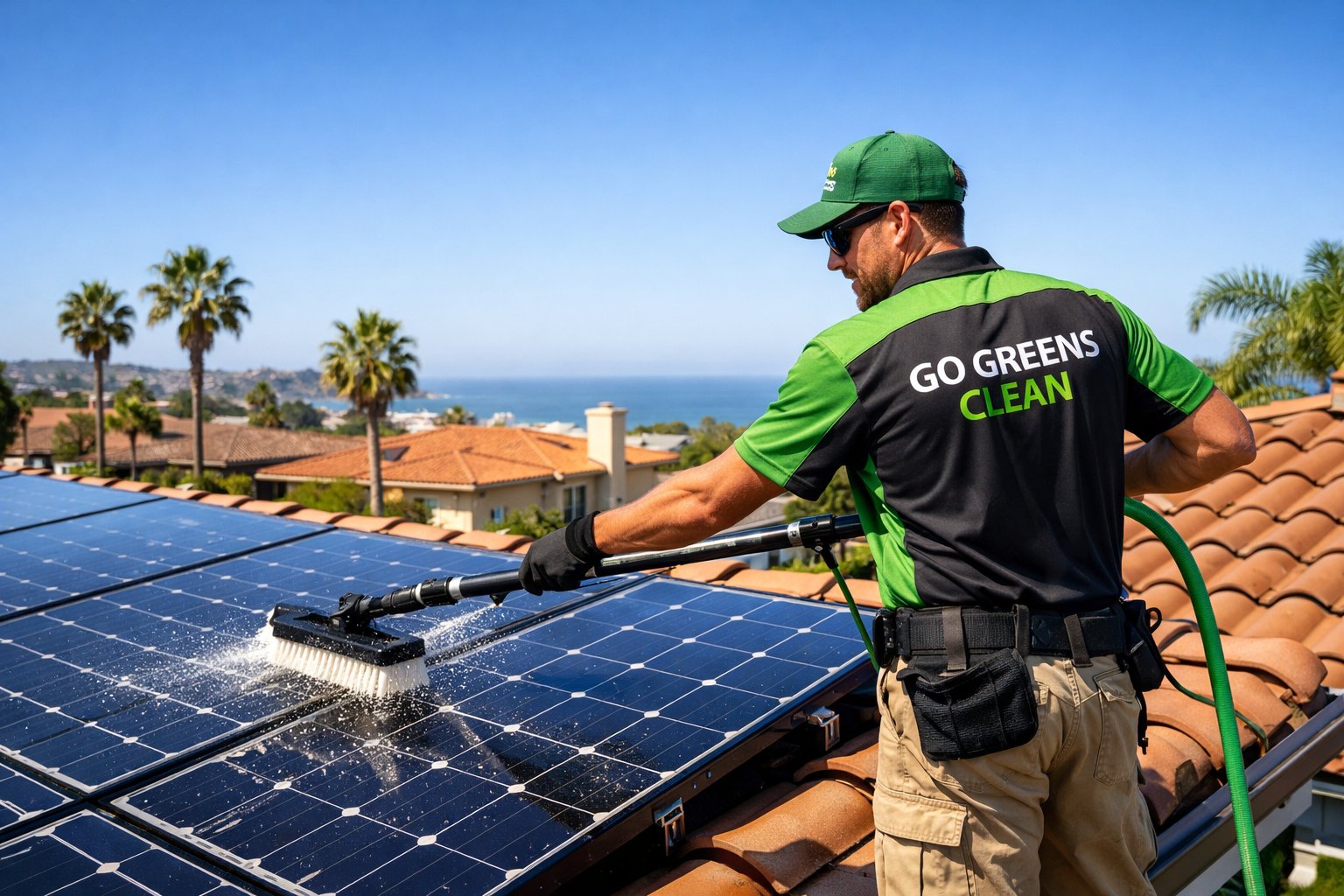
San Diego solar panels typically need cleaning 2-4 times per year, though your specific schedule depends on environmental factors and system performance. Monitoring your energy output and understanding local soiling conditions will help you determine the optimal frequency.
General Frequency Recommendations
For most San Diego homeowners, quarterly cleaning represents a practical baseline schedule. This frequency accounts for the region’s coastal environment and urban pollution levels.
You should increase cleaning frequency to 4-6 times per year if you live near the coast. Salt spray creates a hazy film that reduces solar panel efficiency by 10-20%. The crystallized salt also corrects mounting hardware over time.
Properties near major highways, construction sites, or agricultural areas require more frequent attention. These environments produce airborne particles that accumulate quickly on panel surfaces.
Minimum cleaning schedule for San Diego:
- Standard residential areas: 2-3 times per year
- Coastal properties: 4-6 times per year
- Near pollution sources: 4-5 times per year
- Low-tilt installations: Add 1-2 extra cleanings annually
Spring and fall represent the most critical cleaning periods. Spring addresses heavy pollen deposits, while fall removes accumulated summer dust and prepares panels for winter production.
Factors That Affect Cleaning Schedule
Your panel installation angle significantly impacts how quickly dirt accumulates. Panels installed at steep angles (30 degrees or more) shed debris naturally. Flat or low-angle installations trap water and sediment, requiring more frequent cleaning.
Key environmental factors in San Diego:
- Marine layer exposure: Morning fog deposits salt residue
- Santa Ana winds: Carry desert dust into coastal areas
- Urban smog: Creates oily films that repel water
- Bird activity: Droppings cause hot spots and efficiency losses
Trees near your solar array create ongoing maintenance demands. Overhanging branches drop leaves, sap, and provide perches for birds. These organic materials stick to panels and block sunlight from reaching photovoltaic cells.
Seasonal variations matter in San Diego’s climate. Summer’s dry heat bakes dust onto panel surfaces, making it harder to remove. Winter storms can leave mineral deposits as water evaporates.
Monitoring Performance as a Cleaning Indicator
Your solar monitoring app provides the most reliable signal for when to clean solar panels. Establish a baseline output reading immediately after professional cleaning. Track your daily production over several weeks to understand normal patterns.
A sustained drop of 5% or more indicates soiling problems. Compare current output to the same period in previous months, accounting for seasonal daylight changes. Sudden drops of 15-25% typically mean heavy debris accumulation.
Visual inspection from ground level reveals obvious problems. Use binoculars to check for visible dust layers, bird droppings, or streaky residue. If panels look dull or hazy compared to their original appearance, cleaning is overdue.
Modern systems make data-driven cleaning decisions simple. When your app shows declining performance that weather conditions don’t explain, schedule professional solar panel cleaning. This approach prevents unnecessary cleanings while catching problems before they significantly impact energy production.
DIY vs. Professional Solar Panel Cleaning
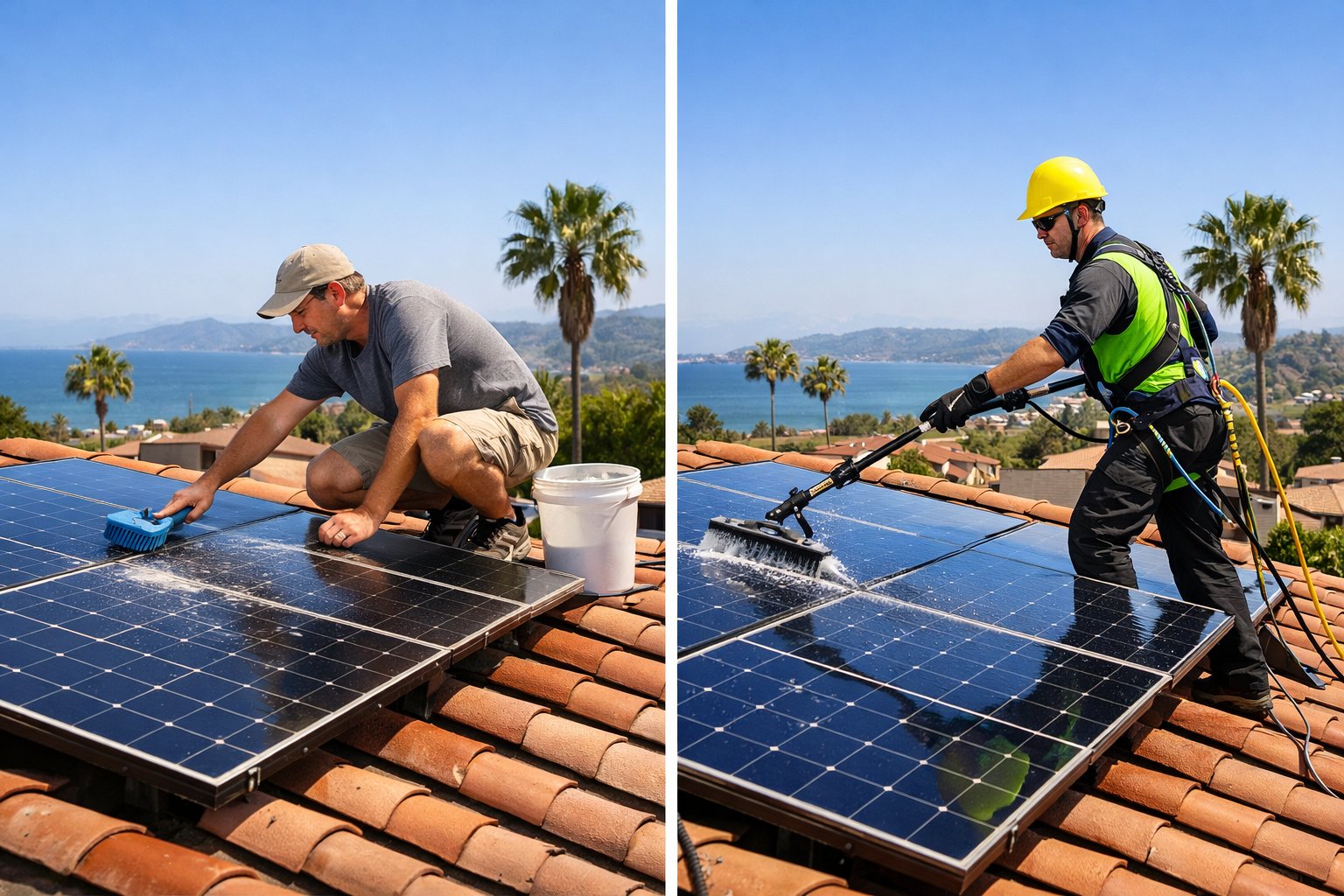
Cleaning solar panels yourself can save money upfront, but it comes with safety risks and potential damage to your system. Professional services offer expertise, proper equipment, and warranty protection that DIY methods cannot match.
Risks and Challenges of DIY Cleaning
Working on your roof creates serious fall hazards, especially on sloped surfaces where solar panels are typically installed. You need proper safety equipment like harnesses and non-slip footwear to prevent injuries.
Using the wrong cleaning products or tools can scratch your panels or damage their protective coating. Hard water, abrasive materials, or pressure washers set too high can reduce panel efficiency by 20-30% instead of improving it. Many homeowners don’t realize that aggressive scrubbing or harsh chemicals void manufacturer warranties.
DIY cleaning also requires you to purchase specialized equipment like extension poles, soft brushes, and deionized water systems. You’ll need to climb on your roof multiple times per year to maintain optimal performance. Most people lack the training to spot early signs of panel damage, wiring issues, or mounting problems that professionals identify during routine cleanings.
Benefits of Professional Solar Panel Cleaning Services
Professional solar panel cleaning services use specialized equipment designed specifically for photovoltaic systems. They apply purified water that prevents mineral deposits and streaking, ensuring panels dry without residue that blocks sunlight.
Trained technicians inspect your system during each visit, catching potential problems before they become costly repairs. They carry insurance that protects you from liability if accidents occur on your property. Most solar panel cleaning service providers also protect your manufacturer warranty, which often requires professional maintenance.
A qualified solar panel cleaner completes the job safely and efficiently, typically finishing in 1-2 hours what might take you half a day. They know the optimal cleaning frequency for San Diego’s climate and can adjust their schedule based on your location’s dust levels and seasonal factors.
Choosing a Solar Panel Cleaning Service in San Diego
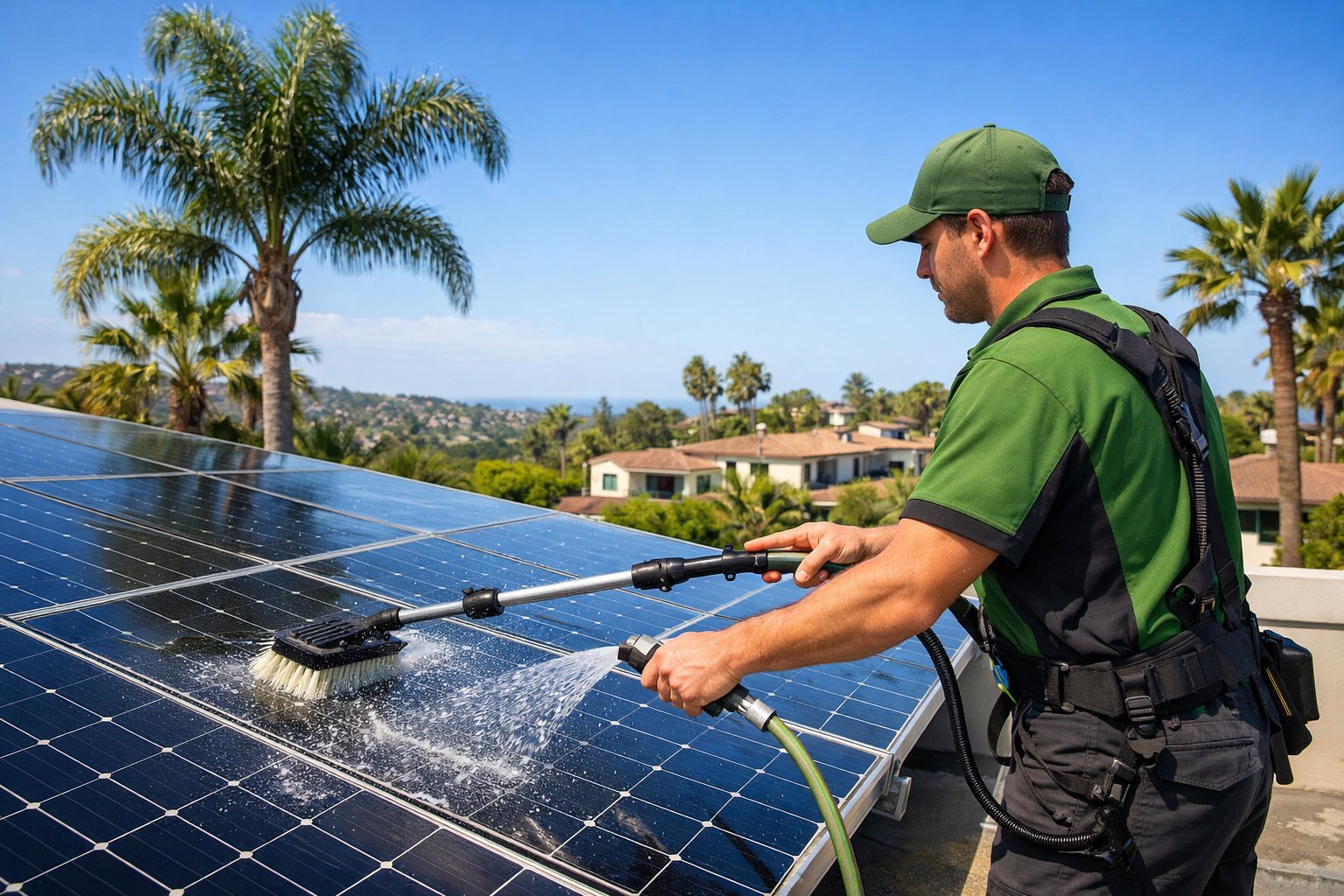
Professional solar panel cleaning services vary in quality, equipment, and expertise. You need to evaluate specific factors to find a provider that will maintain your panels safely and effectively.
What to Look for in a Service Provider
You should verify that a solar panel cleaning service uses deionized water rather than tap water. Regular water leaves mineral deposits on your panels that reduce efficiency over time. Professional services also need proper equipment like soft-bristled brushes and water-fed pole systems designed specifically for solar panels.
Check if the service includes panel inspections during cleaning. Good providers examine your panels for cracks, wiring issues, or alignment problems while they clean. Ask about their cleaning methods to ensure they won’t void your manufacturer’s warranty.
Insurance and licensing matter for your protection. A legitimate solar panel cleaning service carries liability insurance in case of accidents or damage. You should also ask about their experience level and request references from other customers in San Diego.
Pricing transparency helps you avoid surprises. Reliable companies provide clear quotes that include all costs upfront.
Advantages of Hiring Go Greens Clean
Go Greens Clean offers experienced technicians who understand San Diego’s specific climate challenges. They use eco-friendly deionized water systems that remove dirt without leaving streaks or harmful residues on your panels.
Their service includes thorough panel inspections to catch potential problems early. You get detailed reports about your system’s condition after each cleaning visit. They schedule cleanings during optimal times when panels are cool to prevent thermal shock and ensure effective cleaning.
Go Greens Clean carries full insurance and provides flexible scheduling options for residential and commercial properties. Their technicians receive ongoing training on the latest solar panel cleaning techniques and safety protocols.
Best Practices for Maintaining Solar Panel Efficiency
Regular cleaning combined with smart maintenance habits keeps your solar panels working at peak performance. Using the right methods protects your panels from damage while maximizing energy production year after year.
Safe and Effective Cleaning Methods
You should clean solar panels during early morning or evening hours when the glass is cool to avoid thermal shock. Use deionized or distilled water with a soft brush or squeegee to prevent mineral deposits and scratches.
Start by rinsing panels with water to remove loose debris. Apply gentle pressure with a non-abrasive brush in circular motions. Avoid harsh chemicals, pressure washers above 1,500 PSI, or abrasive materials that can damage the protective coating.
For ground-level systems, you can handle light cleaning yourself. Rooftop installations require extra safety precautions. If your panels sit on a steep slope or high roof, professional services like Go Greens Clean provide safe cleaning with specialized equipment. They use proper harnesses and know how to work around electrical components without causing damage.
Never walk directly on solar panels. The weight can create micro-cracks that reduce efficiency over time.
Preventative Maintenance Tips
Check your panels monthly for visible dirt buildup, bird droppings, or shading from nearby trees. Monitor your energy production through your inverter display or app to spot unexpected drops in output.
Trim overhanging branches twice per year to reduce leaf accumulation and prevent scratching during windy conditions. Install bird deterrents if droppings become a recurring problem.
Key maintenance schedule:
- Monthly: Visual inspection and performance check
- Quarterly: Light rinse for dust removal
- Twice yearly: Professional cleaning after pollen season and before winter
- Annually: Complete system inspection including wiring and mounts
San Diego’s dry climate means less natural rain cleaning. Schedule professional cleanings in late spring after peak pollen and again in fall before winter storms arrive.
Protecting Your Solar Panel Investment
Document all cleaning and maintenance activities with dates and photos. Most manufacturers require maintenance records to honor warranty claims for performance issues.
Professional cleaning services provide detailed reports that satisfy warranty requirements. Go Greens Clean maintains records of each visit, giving you proof of proper care if you ever need warranty service.
Inspect panel seals and frame connections during each cleaning. Water intrusion through damaged seals can cause electrical problems and void warranties. Address small issues immediately before they become expensive repairs.
Consider a monitoring system that alerts you to performance drops. Many modern inverters include this feature at no extra cost. Quick responses to efficiency problems prevent long-term energy losses that cost more than regular maintenance.