
Your driveway takes a beating from daily use, coastal weather, and San Diego’s unique environmental conditions. Oil stains, dirt buildup, and salt residue can make even the nicest home look neglected. Regular pressure washing keeps your driveway clean and protects it from long-term damage.
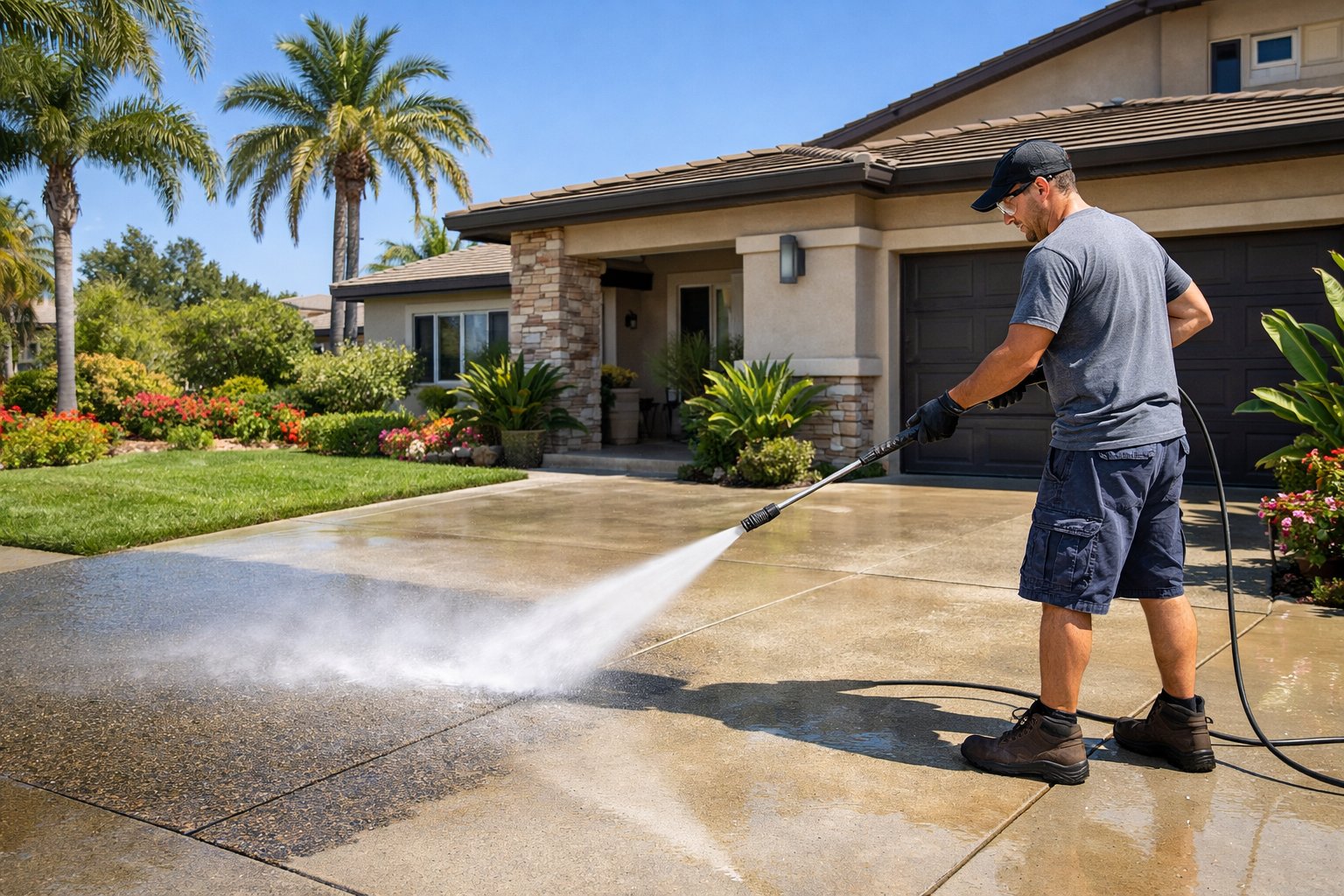
Most San Diego homeowners should pressure wash their driveways once or twice a year, depending on their location and how much traffic the driveway gets. Homes near the coast need more frequent cleaning because of salt air and moisture. Inland properties can often wait a full year between washings.
The right cleaning schedule depends on several factors specific to your property. This guide will help you understand when your driveway needs attention, what affects cleaning frequency, and how to keep it looking good between washings. You’ll also learn whether to hire a professional or do it yourself.
How Often Should You Pressure Wash Your Driveway in San Diego?
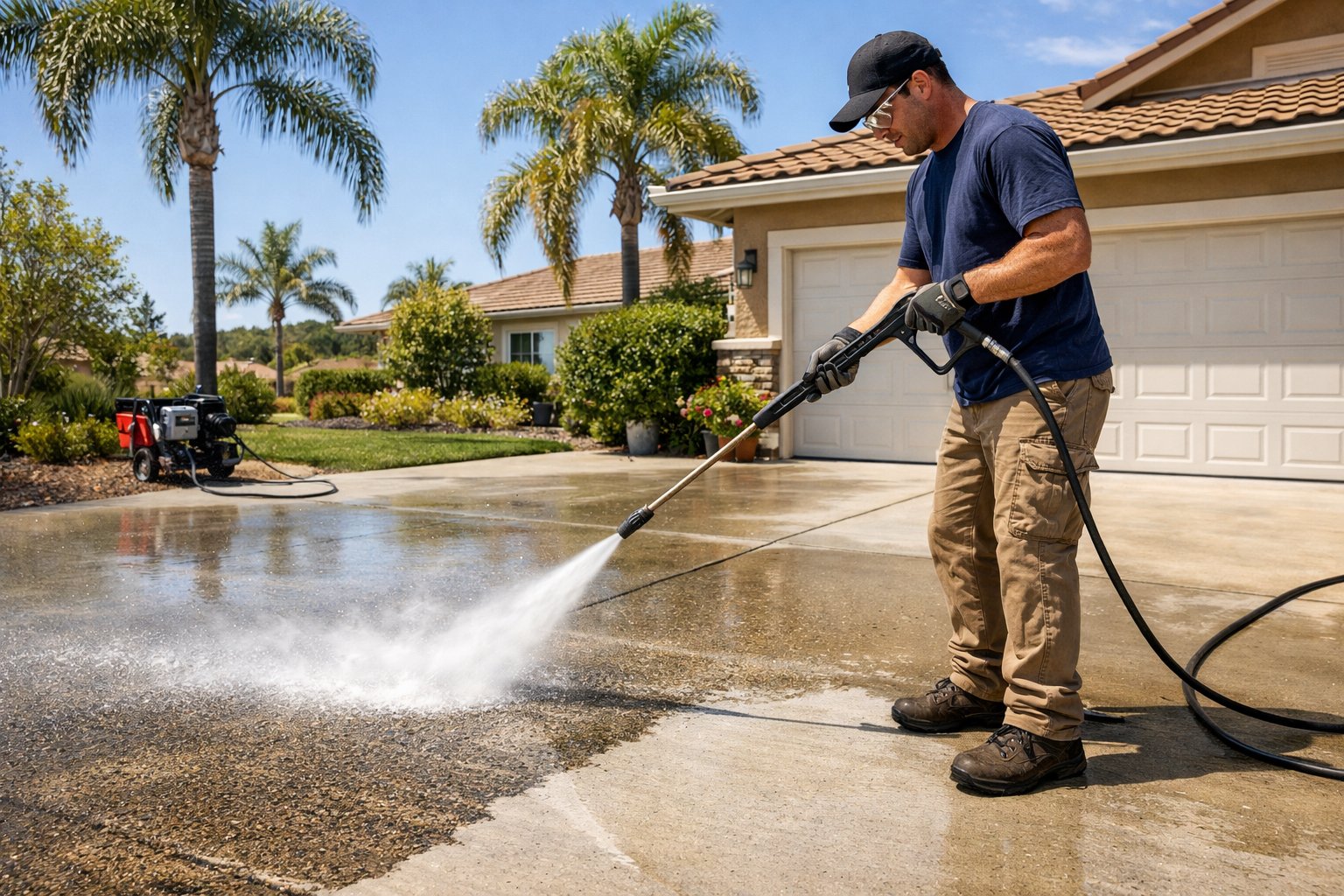
Most San Diego driveways need pressure washing once or twice a year, though this varies based on your specific location and environmental factors unique to the region.
Recommended Frequency for Most Homeowners
You should pressure wash your driveway in San Diego at least once per year to maintain its appearance and structural integrity. This annual cleaning removes dirt, oil stains, and grime that accumulate over time.
If your driveway experiences heavy use or sits under trees, you may need to increase this to twice yearly. Spring and fall are ideal times for driveway cleaning in San Diego’s climate.
Concrete driveways hold up well to annual pressure washing and rarely need more frequent cleaning unless you notice visible staining. Asphalt and brick driveways may show wear faster and benefit from bi-annual maintenance.
Watch for these signs that indicate your driveway needs cleaning sooner:
- Dark stains from oil or tire marks
- Green or black mold growth
- Dirt buildup in cracks and crevices
- Faded or discolored surface areas
Seasonal and Environmental Considerations
San Diego’s mild, dry climate means your driveway faces different challenges than regions with heavy rain or snow. The extended dry periods cause dust and dirt to settle more noticeably on your driveway surface.
Coastal areas in San Diego deal with salt air exposure, which can accelerate surface deterioration. You should pressure wash your driveway more frequently if you live within a few miles of the ocean.
The region’s limited rainfall means natural cleaning doesn’t occur as often. This makes scheduled pressure washing more important for maintaining your driveway’s condition.
San Diego’s eucalyptus trees and other vegetation drop leaves and sap that create stubborn stains. If trees overhang your driveway, plan for cleaning every six months rather than annually.
Key Factors That Affect Pressure Washing Frequency
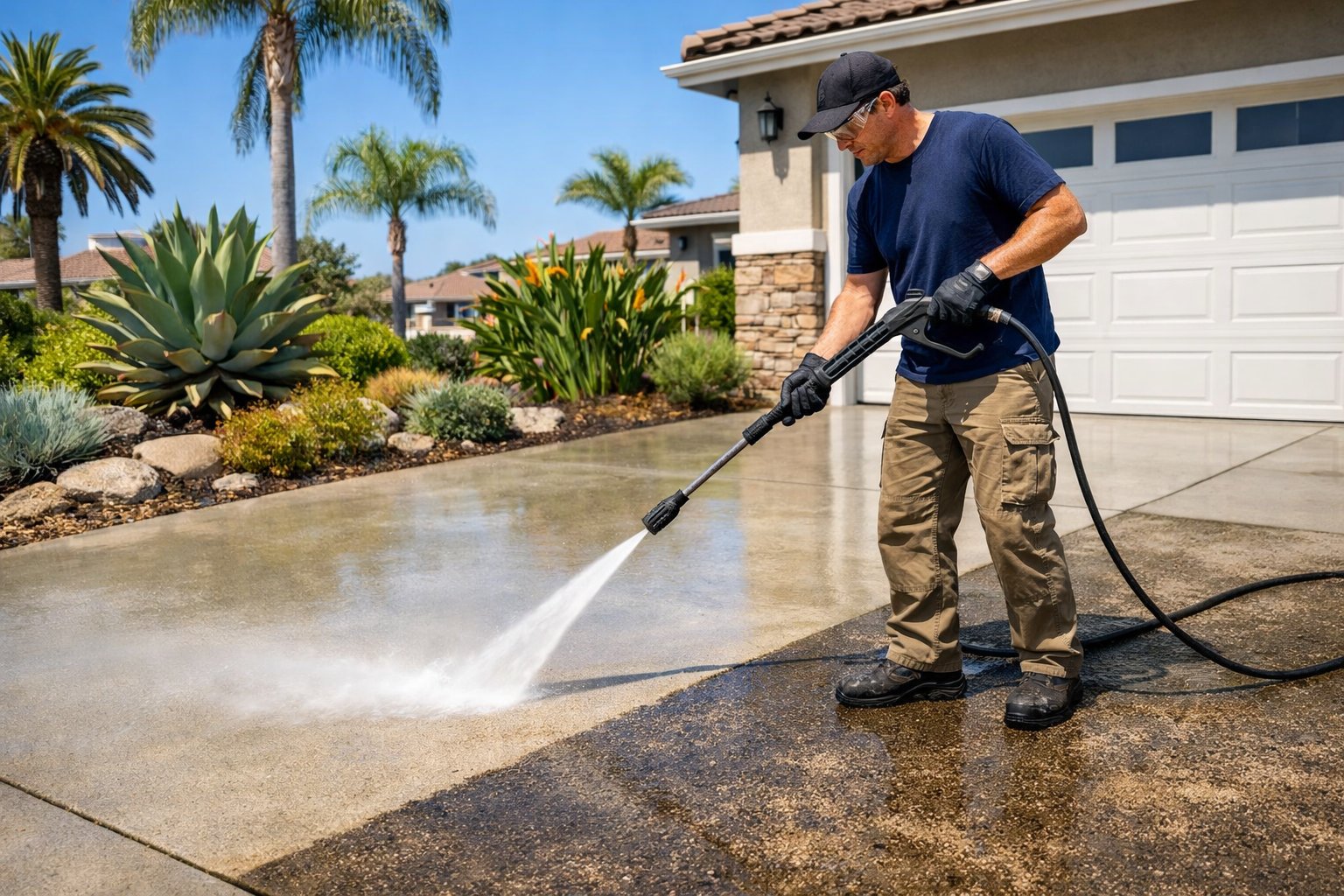
San Diego’s unique climate conditions, your driveway’s material composition, and daily use patterns all play major roles in how often you need to clean your driveway. These factors work together to determine the right schedule for your property.
Climate and Weather Patterns in San Diego
San Diego’s mild, Mediterranean climate creates specific conditions that affect driveway cleaning needs. The region gets minimal rainfall, which means dirt and debris don’t wash away naturally. This leads to gradual buildup of dust, soil, and pollutants on your driveway surface.
The coastal areas face salt air exposure that can leave residue on driveways. This salt buildup attracts moisture and accelerates surface deterioration if left untreated. You’ll notice this especially if you live within a few miles of the ocean.
San Diego’s dry summers allow oil stains and tire marks to set deeper into porous surfaces. The lack of rain means you need pressure washing to remove these substances. Most driveways in San Diego benefit from cleaning every 12 months, though coastal properties may need service every 6-9 months due to salt exposure.
Driveway Materials and Their Cleaning Needs
Different materials require different pressure washing schedules based on their durability and porosity. Concrete driveways handle pressure washing well and typically need cleaning every 12-18 months. Asphalt driveways are less resilient and should be cleaned every 6-12 months using lower pressure settings.
Material-Based Cleaning Schedule:
| Material | Recommended Frequency | Special Considerations |
|---|---|---|
| Concrete | 12-18 months | Can handle higher pressure |
| Asphalt | 6-12 months | Requires lower pressure to prevent damage |
| Brick | 18-24 months | Needs gentle cleaning to protect mortar |
| Pavers | 12-18 months | Pay attention to sand between joints |
Sealed driveways need less frequent cleaning than unsealed surfaces. The sealant creates a protective barrier that prevents dirt from penetrating deep into the material.
Traffic Volume and Usage Impact
The number of vehicles using your driveway directly affects how quickly it gets dirty. A single-car household with one daily driver accumulates far less grime than a multi-car family with teenage drivers.
Heavy vehicles like trucks or work vans leave more oil residue and tire marks. If you park work vehicles on your driveway, you’ll need more frequent pressure washing to manage the additional dirt and fluids these vehicles deposit.
Driveways that serve as play areas or entertainment spaces collect more debris. Foot traffic from kids, pets, and guests brings in dirt, leaves, and organic matter that creates stains. You might need to pressure wash every 6-9 months if your driveway sees this level of activity.
Benefits of Regular Driveway Pressure Washing
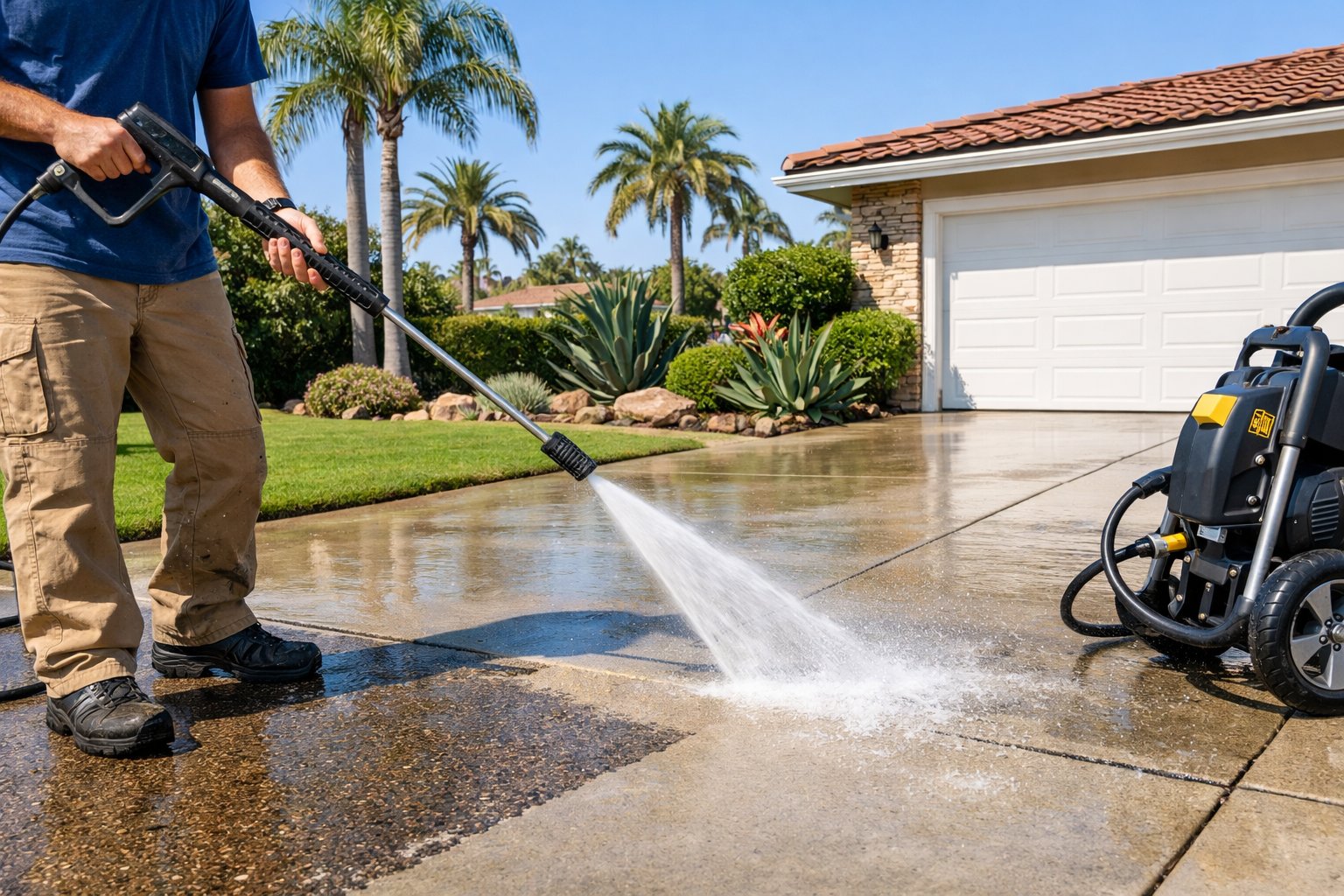
Regular driveway pressure washing protects your concrete or asphalt from damaging organic growth and extends the life of your driveway surface. These benefits translate to lower maintenance costs and a safer outdoor space for your home.
Preventing Mold, Mildew, and Algae Growth
San Diego’s coastal climate creates ideal conditions for mold, mildew, and algae to develop on your driveway. These organisms thrive in moisture and shade, forming dark patches and slippery surfaces.
Pressure washing removes mold spores and algae before they penetrate deep into your driveway’s porous surface. When you let these growths sit for months, they create safety hazards by making the surface slick when wet.
Your driveway can develop green or black streaks that regular hosing won’t remove. Driveway pressure washing uses high-pressure water streams to break down and wash away these stubborn organic materials. This keeps your driveway safe for walking and driving.
Regular cleaning prevents these organisms from establishing root systems in tiny cracks and pores. This protection is especially important in areas near sprinklers or under tree cover where moisture lingers.
Protecting Driveway Condition and Longevity
Dirt, oil, and organic debris break down your driveway’s surface material over time. These contaminants trap moisture against the concrete or asphalt, leading to cracks and deterioration.
Pressure washing clears away harmful substances before they cause permanent damage. Oil stains from vehicles can soften asphalt and eat into concrete if left untreated. Regular cleaning prevents these chemicals from penetrating deep into your driveway.
Your driveway surface stays stronger when you remove debris that holds moisture. Water trapped under layers of grime can freeze and expand in cooler months, creating small cracks that grow into larger problems.
Driveway pressure washing also prepares the surface for protective sealants. A clean surface allows sealers to bond properly, providing an additional layer of protection against weather and wear.
Signs Your Driveway Needs Immediate Pressure Washing
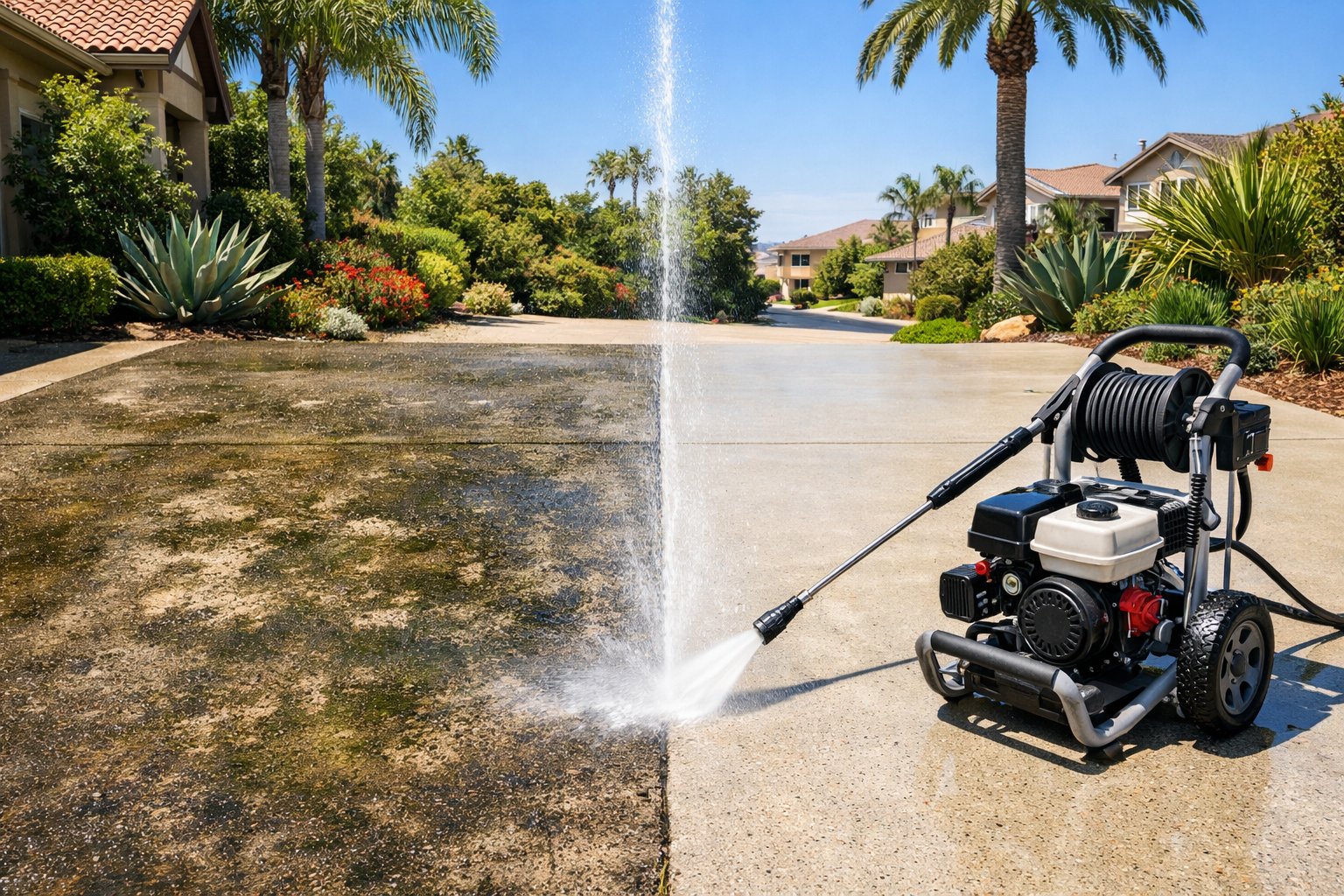
Some warning signs tell you when your driveway needs cleaning right away instead of waiting for your regular schedule. Dark stains and slippery surfaces mean it’s time to act fast to prevent damage and safety issues.
Visible Stains and Discoloration
Oil stains, rust marks, and dark patches on your driveway show that dirt and grime have set in deep. These stains don’t just look bad. They can break down the concrete or asphalt over time if you leave them untreated.
Common stains that need immediate attention:
- Oil and grease spots from vehicles that can eat away at concrete
- Rust stains from metal objects or irrigation water
- Dark streaks from tires that build up and become permanent
- Organic stains from berries, leaves, or sap
In San Diego’s climate, these stains can bake into the surface quickly under the strong sun. Fresh stains are easier to remove than old ones. When you notice discoloration spreading across your driveway, schedule driveway cleaning soon.
Slippery or Hazardous Surfaces
Algae, mold, and mildew create a slick film on your driveway that becomes dangerous when wet. This is a serious safety risk for anyone walking or driving on the surface.
You might notice green or black growth in shaded areas of your driveway. These organisms thrive in San Diego’s coastal humidity, even though the area stays relatively dry. The growth often appears near trees, under eaves, or in spots that don’t get much sun.
A slippery driveway needs pressure washing right away. The longer you wait, the more these organisms spread and the harder they become to remove. Your driveway can go from slightly slick to seriously hazardous in just a few weeks during the cooler months.
Professional vs. DIY Pressure Washing Methods
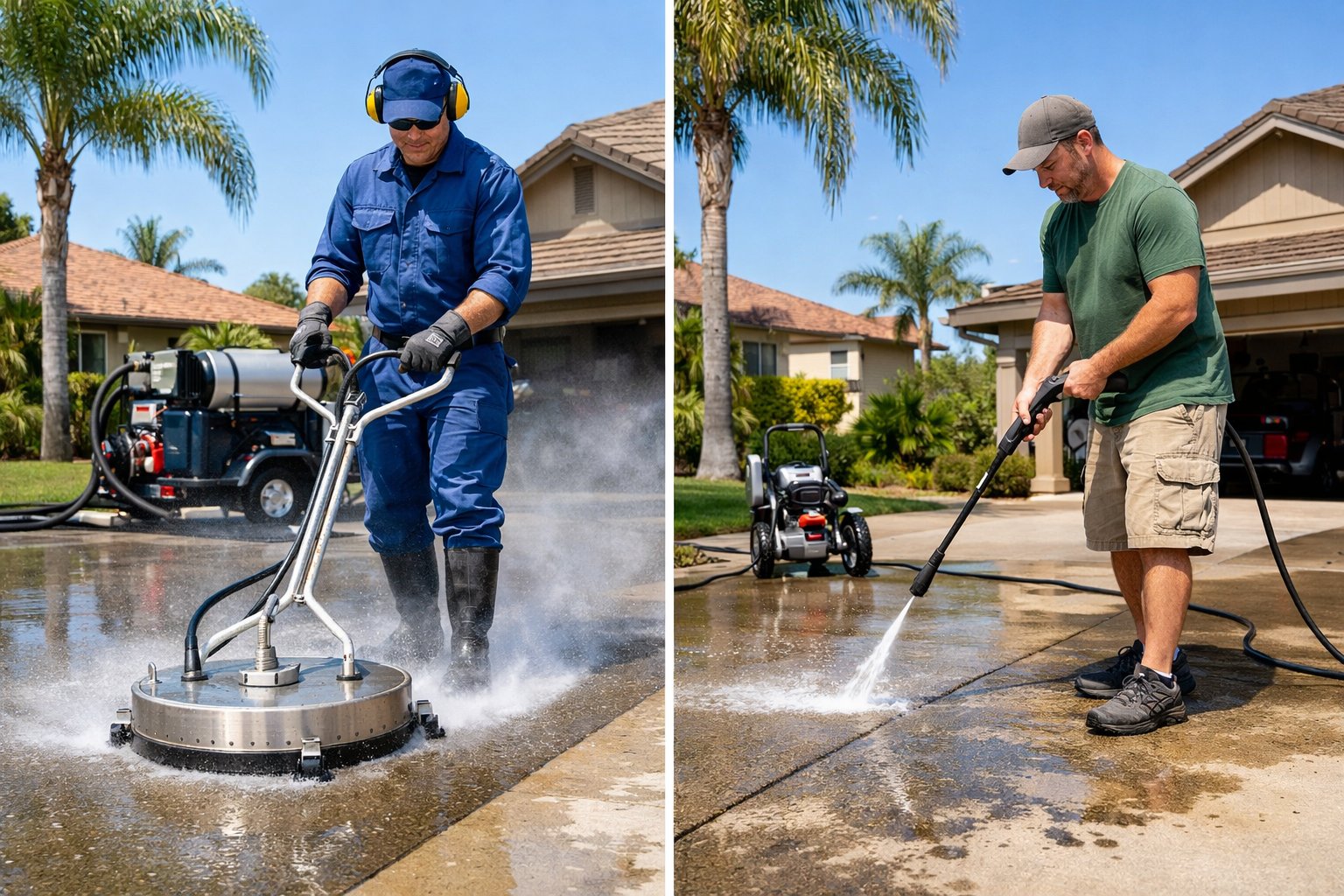
Professional services bring expertise and commercial equipment to your driveway cleaning, while DIY approaches offer cost savings if you have the right tools and knowledge. Your choice depends on factors like budget, available time, and your comfort level with powerful equipment.
Advantages of Professional Pressure Washing
Professional pressure washing delivers superior results through specialized training and commercial-grade equipment. Trained technicians understand how to adjust pressure settings for different driveway materials, whether you have concrete, pavers, or asphalt. They know exactly which cleaning solutions work best for oil stains, rust marks, and mildew without damaging your surface.
Professionals complete the job faster than most homeowners. What might take you an entire weekend takes them just a few hours. They handle all setup, cleaning, and cleanup while you focus on other tasks.
Safety is another major benefit. Pressure washers generate powerful water jets that can cause injuries if misused. Professional crews wear proper safety gear and follow strict protocols to prevent accidents. They also carry insurance to cover any potential damage, giving you peace of mind.
Many professional services in San Diego offer maintenance plans with scheduled cleanings throughout the year. This regular care keeps your driveway looking fresh and helps you spot problems early, like cracks or surface damage that need attention.
When DIY Pressure Washing Is Appropriate
DIY pressure washing makes sense if you already own or can rent equipment at a reasonable price. Light maintenance cleaning between professional services is a good use of DIY methods. If your driveway only has surface dirt and hasn’t accumulated heavy stains, you can handle this yourself.
You need the right equipment for safe DIY work. Rent a pressure washer rated for concrete (typically 3,000 PSI). Buy or rent the correct nozzle tips—a 25-degree nozzle works well for most driveway cleaning. Wear safety goggles, closed-toe shoes, and long pants to protect yourself from debris.
Start with lower pressure settings and test a small area first. Keep the nozzle moving in steady, even strokes about 12 inches from the surface. Never point the spray at people, pets, or windows.
DIY pressure washing requires significant time investment. You’ll spend hours on preparation, actual cleaning, and putting everything away. Factor in the learning curve if you’ve never used a pressure washer before.
Costs and Safety Considerations
Professional driveway pressure washing in San Diego typically costs $0.10 to $0.30 per square foot. A standard two-car driveway runs between $100 and $200 for professional service. This price includes labor, equipment, cleaning solutions, and cleanup.
DIY costs seem lower upfront. Pressure washer rentals run $40 to $100 per day. Purchasing a residential unit costs $150 to $500. You’ll also need cleaning solutions, safety gear, and possibly replacement nozzles.
Hidden DIY costs add up quickly. You might damage your driveway surface by using too much pressure. Etching in concrete or chipped pavers requires expensive repairs. You could also harm nearby plants with harsh chemicals or high-pressure spray.
Safety risks are real with pressure washing. High-pressure water can cut skin and cause serious injuries. Falls from ladders or slips on wet surfaces send people to emergency rooms every year. Your homeowner’s insurance might not cover injuries from misused equipment.
| Factor | Professional | DIY |
|---|---|---|
| Cost per job | $100-$200 | $40-$100 rental |
| Time required | 2-4 hours | 6-8 hours |
| Injury risk | Low (insured) | Higher (your responsibility) |
| Result quality | Consistent, thorough | Varies by experience |
Professionals carry liability insurance and workers’ compensation coverage. If something goes wrong during the job, their insurance handles it. When you do it yourself, you’re personally responsible for any damage or injuries that occur.
Tips to Extend the Time Between Pressure Washings
Taking care of your driveway between professional cleanings can reduce how often you need to pressure wash. Simple upkeep tasks and protective treatments keep dirt and stains from building up too quickly.
Routine Maintenance and Spot Cleaning
Sweep your driveway weekly to remove leaves, dirt, and debris before they break down and stain the surface. This simple habit prevents organic matter from creating dark spots that require intensive driveway cleaning.
Address spills immediately when they happen. Oil, grease, and other liquids penetrate concrete quickly in San Diego’s warm climate. Use absorbent materials like cat litter on fresh oil stains, then scrub with dish soap and hot water. The faster you act, the less likely the stain will set permanently.
Hose down your driveway monthly with regular water pressure. This light cleaning removes surface dust and prevents grime from bonding to the concrete. Pay extra attention to areas under trees or near landscaping where organic debris collects.
Trim back plants and trees that hang over your driveway. Overhanging vegetation drops sap, berries, and leaves that create stubborn stains. Keeping plants trimmed also improves air circulation, which helps the surface dry faster after rain.
Sealing and Protecting Your Driveway
Apply a quality concrete sealer every 2-3 years to create a protective barrier against stains and moisture. Sealers make driveway cleaning easier by preventing oil, grease, and water from penetrating the concrete surface.
Choose a penetrating sealer for San Diego’s climate. These products soak into the concrete rather than sitting on top, which makes them more durable in areas with sun exposure. They also resist yellowing better than topical sealers.
Reapply sealer after pressure washing once the surface is completely dry. Wait at least 24-48 hours before sealing to ensure all moisture has evaporated. A properly sealed driveway sheds water and resists staining, which extends the time between deep cleanings by several months.