Artificial turf has become a popular choice for San Diego homeowners who want a green lawn without the high water bills and constant upkeep. But before you invest in synthetic grass, you need to know how long it will actually last. High-quality artificial turf in San Diego typically lasts between 10 to 20 years, depending on factors like material quality, installation, usage, and maintenance.
The lifespan of your artificial turf depends on several things you can control. The quality of materials you choose, how well the turf is installed, and how much wear it gets all play a role. San Diego’s sunny climate can also affect how your turf holds up over time.
This guide will walk you through what impacts your turf’s durability and how to get the most years out of your investment. You’ll learn about installation quality, maintenance tips, and signs that it might be time for a replacement. Understanding these factors helps you make smart decisions about your landscaping.
Average Lifespan of Artificial Turf in San Diego
High-quality artificial turf in San Diego typically lasts 15 to 25 years. The specific lifespan depends on where you install it and how much traffic it receives.
Expected Years of Use by Environment
Your synthetic grass performs differently based on San Diego’s unique conditions. The constant sun exposure can affect turf lifespan, but modern materials resist UV damage well.
Residential lawns with light to moderate use generally last 20 to 25 years. These installations face less stress from foot traffic and benefit from San Diego’s mild winters.
Shaded areas tend to preserve your artificial lawn longer than spots in direct sunlight. The UV rays gradually break down synthetic fibers over time.
San Diego’s low rainfall helps extend how long artificial grass lasts by reducing mold and drainage issues. You won’t deal with the same moisture-related wear that occurs in wetter climates.
Temperature extremes rarely affect synthetic turf here. The mild climate prevents the expansion and contraction that shortens turf lifespan in areas with harsh winters or extreme heat.
Comparison: Residential, Commercial, and Sports Fields
Residential artificial turf experiences the longest lifespan at 20 to 25 years. Your backyard or front lawn sees limited foot traffic compared to other settings.
Commercial installations last 10 to 15 years on average. Office buildings, retail centers, and public spaces deal with higher volumes of people walking across the synthetic lawn daily.
Sports fields have the shortest lifespan at 8 to 12 years. Athletic activities create intense wear patterns that break down fibers faster than normal walking.
| Environment | Average Lifespan | Primary Wear Factor |
|---|---|---|
| Residential | 20-25 years | Light foot traffic |
| Commercial | 10-15 years | Moderate to heavy traffic |
| Sports Fields | 8-12 years | Intense athletic use |
Pet areas fall between residential and commercial ranges. Your synthetic grass in dog runs typically lasts 12 to 18 years depending on the number and size of pets using the space.
Key Factors That Affect Turf Longevity
Several key factors determine how long your artificial turf will perform in San Diego’s unique environment. The materials used in your turf, the city’s sunny climate, and how much your lawn gets used all play important roles in overall lifespan.
Quality of Materials and UV Resistance
The quality of your artificial turf directly impacts how many years you’ll get from your investment. High-quality artificial turf uses UV-resistant fibers that won’t break down quickly under constant sun exposure.
The backing material matters just as much as the surface. Strong polyurethane backing resists cracking and holds up better than cheaper latex options. The blade shape also affects durability since certain designs bounce back better after being stepped on.
Key material features to look for:
- UV stabilizers in the fiber coating
- Dense fiber construction (face weight of 60+ oz)
- Polyurethane backing instead of latex
- Lead-free and non-toxic materials
The type of turf you choose makes a difference too. Different synthetic grass products use different fiber types, with polyethylene and nylon being the most durable options. Better materials cost more upfront but last longer and need fewer repairs.
San Diego Climate and Sun Exposure
San Diego gets about 266 sunny days per year, which means your turf faces significant UV exposure. This constant sunlight can fade colors and weaken fibers in lower-quality products.
The mild temperatures in San Diego actually help turf longevity compared to regions with harsh winters. Your synthetic grass won’t deal with freeze-thaw cycles that cause cracking in other parts of the country. However, the intense UV rays require proper protection through uv-resistant turf materials.
Limited rainfall means less stress on drainage systems, but you still need proper installation to handle occasional heavy rains. The dry climate reduces mold and mildew growth, which extends the life of your turf.
Usage Intensity and Foot Traffic
How you use your artificial turf affects how long it lasts. High-traffic areas like play zones, pet runs, and walkways wear down faster than decorative spaces.
Heavy foot traffic compresses the infill and flattens the blades over time. If you have kids who play outside daily or multiple pets, expect more wear in those specific areas. Commercial-grade turf handles heavy use better than residential options.
Traffic level guidelines:
- Light use (decorative): 20-25 years
- Moderate use (family yard): 15-20 years
- Heavy use (pets, sports): 10-15 years
Regular brushing helps high-traffic areas recover by lifting flattened blades. You can also rotate furniture and play equipment to spread out wear patterns across your yard.
Importance of Turf Installation Quality
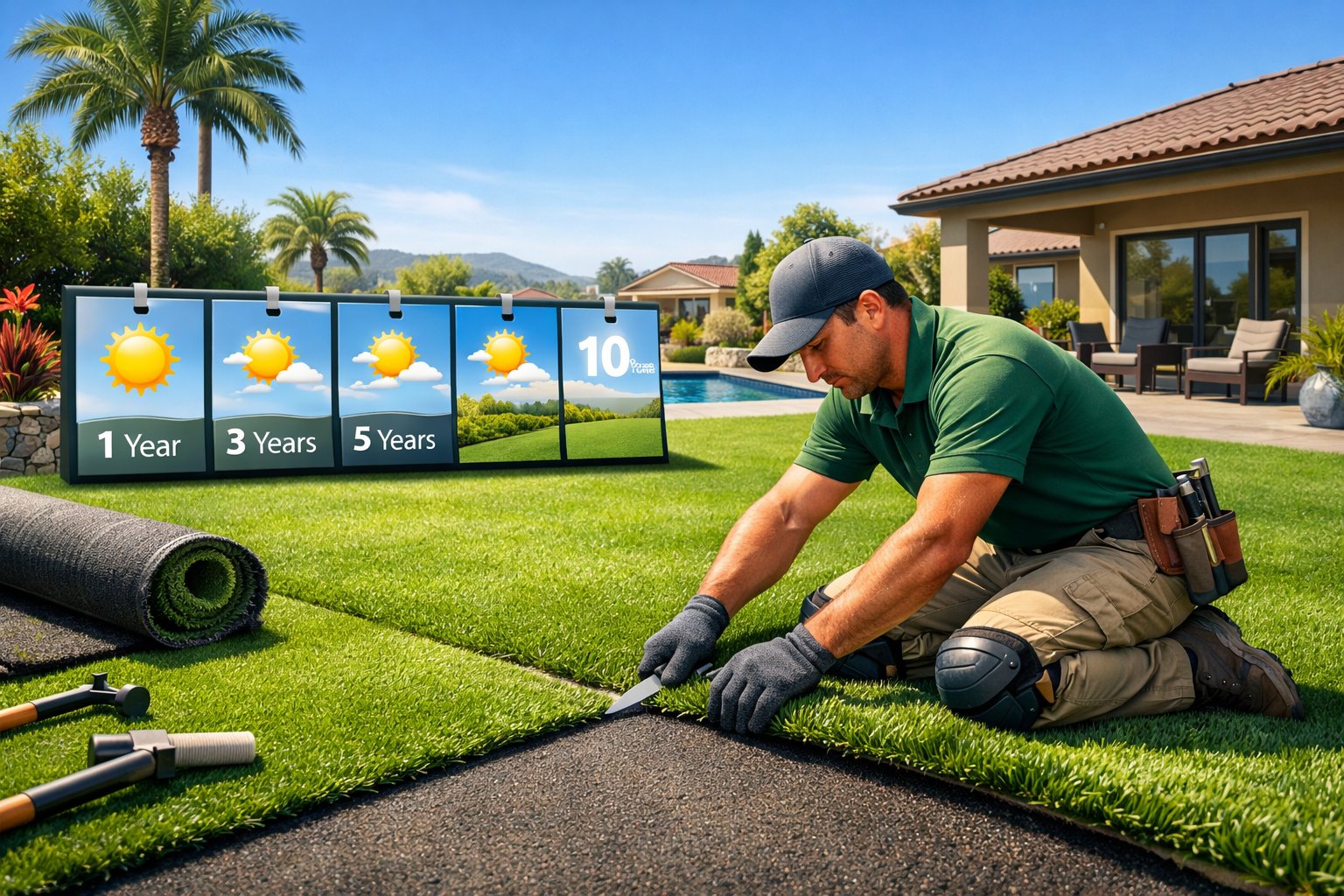
Installation quality directly affects how long your artificial turf will last and how well it performs. Poor installation leads to problems like water pooling, shifting turf, and premature wear that can cut years off your investment.
Proper Base Preparation and Drainage
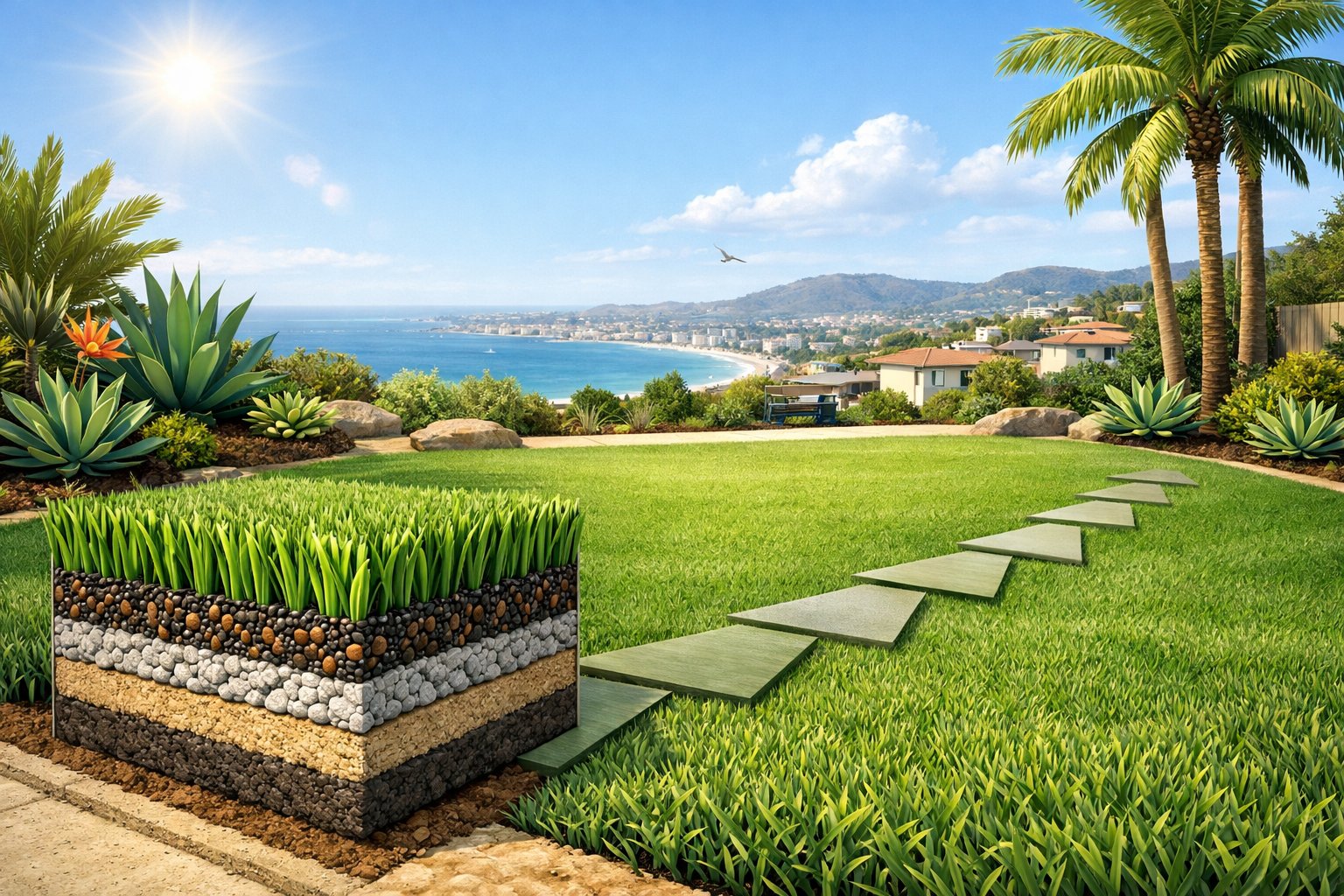
The base layer under your artificial turf creates the foundation for everything else. A properly compacted base prevents the turf from settling unevenly or developing low spots where water can collect.
Your installer should excavate the area and create a base using crushed stone or decomposed granite. This material needs to be compacted in layers to ensure stability. Each layer should be about 2-3 inches thick and compacted thoroughly before adding the next one.
Drainage is critical in San Diego, especially during winter rains. The base must be graded to direct water away from buildings and prevent pooling on the surface. Without proper drainage, water sits on your turf and can damage the backing material over time.
Key base preparation steps include:
- Removing existing grass and soil to proper depth
- Installing landscape fabric to block weeds
- Adding and compacting base material in layers
- Creating proper slope for drainage (typically 1-2% grade)
The turf infill also plays a role in drainage by allowing water to flow through the turf fibers to the base below.
Choosing Experienced Installers
An experienced installer knows how to handle the specific challenges of artificial turf installation in San Diego. They understand local soil conditions, drainage requirements, and how the climate affects turf performance.
Look for installers who provide detailed documentation of their process. Quality contractors take photos of the base preparation and drainage system before covering it with turf. This gives you proof that the work was done correctly.
Check that your installer properly seams the turf sections together. Weak seams separate over time and create visible lines in your lawn. Professional installers use quality adhesives and seaming tape designed for outdoor use.
Your installer should also understand how different applications require different approaches. A residential lawn needs different base preparation than a pet area or high-traffic commercial space.
Maintenance Practices to Prolong Turf Lifespan
Regular care keeps your artificial lawn looking fresh and helps it reach its full 15 to 20 year lifespan. Simple tasks like cleaning, managing pet waste, and fixing small problems prevent bigger issues down the road.
Routine Cleaning and Brushing
You should remove leaves, dirt, and debris from your synthetic grass at least once a week using a leaf blower or plastic rake. Metal rakes can damage the turf fibers, so avoid them.
Brush high-traffic areas every few weeks with a stiff-bristled broom to keep the blades standing upright. This prevents matting and maintains a natural look. Focus on spots where people walk most often, like paths to doors or play areas.
Rinse your turf with a garden hose monthly to wash away dust and small particles. For stains from food or drinks, use mild soap and water right away. Quick cleaning prevents permanent marks.
Basic Cleaning Schedule:
- Weekly: Remove debris
- Bi-weekly: Brush high-traffic zones
- Monthly: Rinse with water
- As needed: Spot clean stains
Managing Pet Waste and Odors
Pick up solid pet waste daily, just like you would with natural grass. Rinse the area with water to prevent buildup.
For urine odors, spray the affected spots with a 1:1 mix of water and white vinegar once a week. You can also use enzyme-based cleaners made for artificial turf. These break down odor-causing bacteria without harming the turf fibers.
Deep clean pet areas monthly by applying a turf deodorizer or washing with a mild detergent solution. Good drainage in your turf base helps liquids pass through quickly, which reduces smell problems.
Minor Repairs and Addressing Damage
Check your turf every few months for loose seams, lifted edges, or damaged areas. Small problems grow bigger if you ignore them.
Fix loose seams immediately with turf glue or seam tape to prevent tripping hazards and further damage. Press down lifted edges and secure them with landscape staples or nails.
Replace damaged patches by cutting out the worn section and installing a new piece. Match the fiber direction so the repair blends in. For burns or deep tears larger than a few inches, call a professional installer.
Keep infill levels consistent by adding more material to areas that look flat or compressed. This supports the turf fibers and maintains proper drainage.
Benefits of Artificial Turf in San Diego
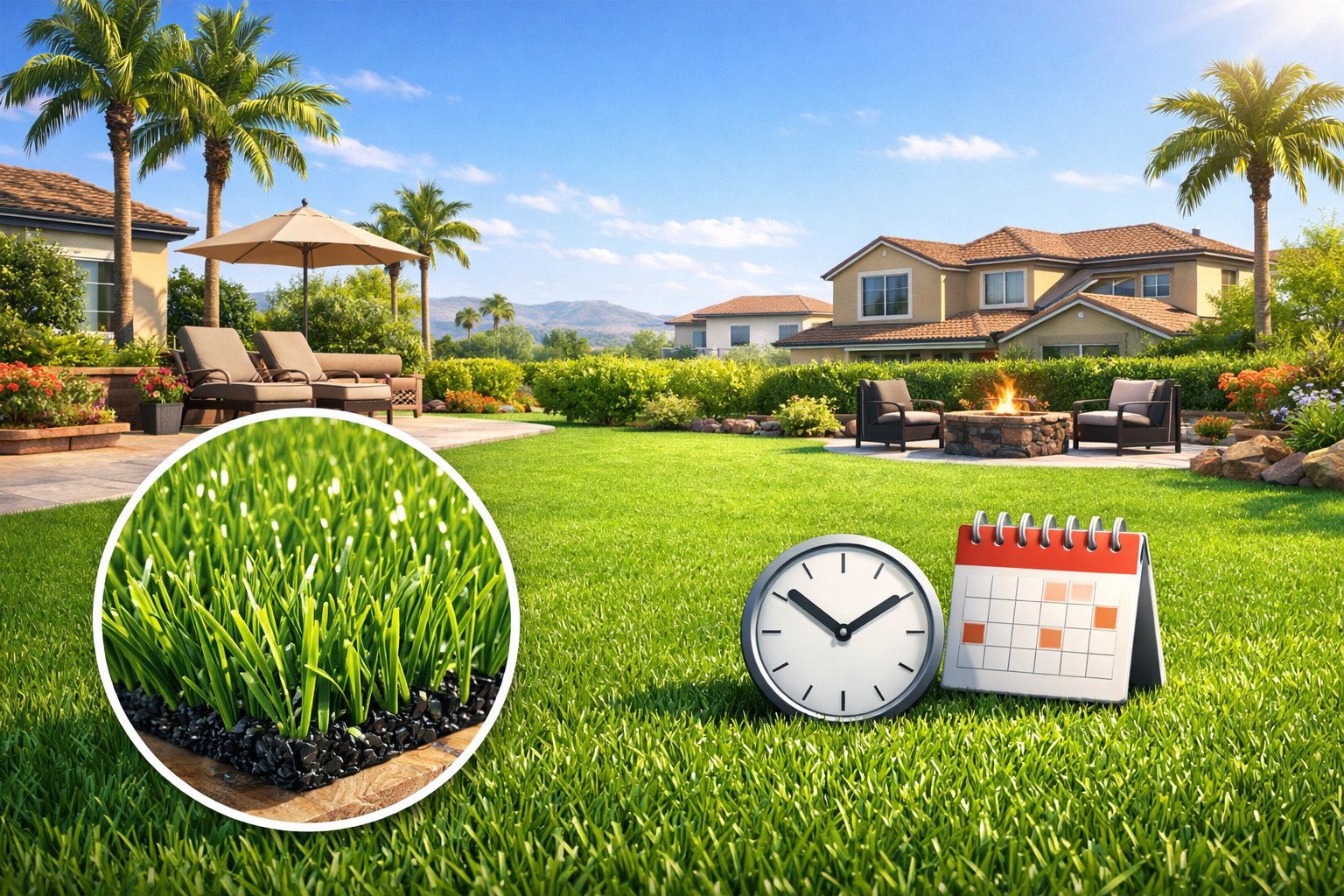
Artificial turf offers San Diego property owners practical advantages that address the region’s unique climate challenges. From reducing water bills to eliminating weekend lawn care, synthetic grass provides year-round performance with minimal environmental impact.
Water Conservation and Cost Savings
San Diego’s drought-prone climate makes water conservation a priority for homeowners. Switching to an artificial lawn eliminates the need for regular watering, saving thousands of gallons annually. A typical natural grass lawn requires about 55 gallons of water per square foot each year in Southern California.
Synthetic turf cuts these water costs to zero for irrigation. Your monthly water bills drop significantly after installation. Many San Diego homeowners report savings of $1,200 to $2,400 per year on water expenses alone.
The initial investment in fake grass typically pays for itself within 5 to 7 years through water savings. You also avoid costs associated with lawn equipment, fertilizers, and pest control products. These combined savings make artificial turf a financially smart choice for long-term property ownership.
Low-Maintenance Landscaping Advantages
Traditional grass lawns demand constant attention through mowing, edging, aerating, and fertilizing. Synthetic turf removes these time-consuming tasks from your schedule. You won’t need to mow your lawn every weekend or hire lawn care services.
An artificial lawn stays green year-round without seasonal die-off or brown patches. The surface handles heavy foot traffic from kids and pets without developing mud puddles or bare spots. Most quality installations include warranties of 10 to 15 years.
Basic maintenance involves occasional rinsing and brushing to keep fibers upright. Debris removal with a leaf blower takes just minutes. This simplicity frees up your weekends for activities you actually enjoy.
Eco-Friendly and Sustainable Aspects
Artificial turf eliminates the need for harmful pesticides and chemical fertilizers that can contaminate groundwater. Gas-powered lawn mowers produce significant emissions that contribute to air pollution. Removing these from your routine reduces your carbon footprint.
Modern synthetic grass products use recycled materials in their construction. The long lifespan of quality turf means less frequent replacement and reduced waste. Your yard remains green without depleting local water resources during California’s frequent droughts.
Proper drainage systems in professional installations prevent water runoff issues. The permeable backing allows rainwater to filter through naturally. This approach supports sustainable landscaping practices while maintaining an attractive outdoor space.
Recognizing When Artificial Turf Needs Replacement
Even well-maintained artificial turf eventually shows signs of wear that indicate it’s time for a change. Knowing what to look for helps you decide whether repairs will suffice or if full replacement is necessary.
Signs Your Turf Has Reached End of Life
Your turf’s fibers are the first place to check for damage. When grass blades start thinning, fraying, or splitting, they won’t recover through maintenance. You’ll notice these issues most in areas where people walk frequently or where pets spend time.
Fading color is another clear indicator. San Diego’s intense UV exposure breaks down synthetic fibers over time, turning vibrant green turf dull or patchy. This discoloration can’t be reversed.
Drainage problems signal serious concerns. If water pools on your turf after rain or irrigation, the backing material or infill has likely failed. This creates muddy spots and can lead to mold growth.
Seam separation presents both aesthetic and safety issues. When gaps appear between turf sections, you’ll see the base material underneath. These openings create tripping hazards and allow weeds to grow through.
Persistent odors, especially in pet areas, mean bacteria has penetrated the turf backing. Standard cleaning won’t eliminate smells that have reached this stage.
Repair or Replacement vs Cleaning
When to Repair
Small-scale damage can often be fixed affordably. Tears, isolated worn spots, or separated seams measuring less than a few square feet are good candidates for patching. You can cut out the damaged section and install a matching piece of turf.
Infill replenishment offers another cost-effective solution when fibers are intact but matted. Adding new infill material helps restore cushioning and lift flattened blades back to their original position.
When to Replace
Full replacement becomes necessary when damage covers large areas or multiple issues occur simultaneously. If you’re dealing with widespread fading, poor drainage, and thinning fibers, repairs won’t deliver satisfactory results. The cost of multiple repair attempts often exceeds replacement expenses, especially when turf has reached 10-15 years of age.
Regular Cleaning and Maintenance
Proper cleaning extends your turf’s lifespan and keeps it looking fresh. Regular brushing removes debris and keeps fibers upright, preventing matting. Rinse your turf periodically with water to wash away dust and small particles.
For deeper cleaning, use a mild soap solution and soft brush for stains or spills. Remove leaves, twigs, and other debris promptly to prevent decomposition and odors. If you have pets, rinse affected areas frequently and use enzyme cleaners designed for artificial grass to eliminate odors and bacteria.
For professional-grade results and thorough maintenance, consider using a specialized service like Go Greens Clean. Professional cleaning services have industrial-grade equipment and specialized products that can deep-clean your turf, sanitize surfaces, and restore your lawn’s appearance more effectively than DIY methods. Preventive cleaning maintenance can help you avoid costly repairs or premature replacement.