If you’ve got a dog in San Diego, you’re probably familiar with the classic backyard struggle. Natural grass just can’t keep up with pups that dig, dash, and do their business in the same spots every day. You end up with dead patches, muddy paws, weird smells, it’s not great, honestly.
Artificial turf made for dogs actually solves most of these headaches. It’s tough, drains well, and shrugs off odors better than you’d expect. The best stuff looks and feels like real grass, but it’s got things like antimicrobial backing and quick-drain tech baked in. In San Diego’s sunny climate, it just makes life easier, and maintenance drops way down compared to regular grass.
So, if you’re curious about the best artificial turf for dogs in San Diego, let’s break down what’s out there, what actually matters, and what to expect if you decide to go for it. I’ll cover some of the top products, how to pick the right one for your yard, and what the whole process is like from start to finish.
Top Pet-Friendly Artificial Turf Options in San Diego
San Diego’s full of solid brands and local companies specializing in pet-friendly turf. These aren’t just regular fake lawns, they’re built to handle all the chaos dogs bring, while keeping your yard looking and smelling good. Most have advanced drainage, antimicrobial features, and are tough enough for local weather.
Best-Rated Pet Turf Brands
SYNLawn is a crowd favorite for dog owners here. Their turf has antimicrobial protection that helps keep odors in check and bacteria at bay. The drainage is pretty impressive, urine goes right through, no puddles.
US Turf San Diego designs their stuff for serious dog traffic. Their turf has flow-through backing, so drainage isn’t a problem, and UV protection so it won’t fade. Their installs are built to last, even if you’ve got a pack of wild pups.
Local Suppliers and Retailers
SD Turf Center works with both homeowners and contractors around the county. Their pet turf comes with zeolite infill for natural odor control, no harsh chemicals needed. They’ll actually help you sort out drainage and base prep, which is pretty helpful if you’re dealing with tricky soil.
Go Turf Direct is a go-to for questions about cost and upkeep. They’ve got a range of pet-friendly turf options with different textures and pile heights. Their products use polyethylene fibers that look surprisingly real.
Sunny Builders Group does custom installs for pet owners. Their turf is tough, with high stitch density, good luck to dogs who love to dig. There are options for every yard size and budget, so you aren’t stuck with a one-size-fits-all solution.
Popular Pet Turf Products
Premium drainage systems are probably the #1 request from San Diego dog owners. Most top-end turf uses a crushed rock base and perforated backing that can drain over 30 inches of water an hour. If you’re tired of puddles and muddy paws, this is the feature to look for.
Antimicrobial backing is a must for keeping things fresh. It’s pretty much standard now, but always good to double-check before buying. It works alongside regular cleaning to keep the turf from turning into a stink zone.
Zeolite infill is the secret weapon for odor control. This volcanic mineral soaks up ammonia from urine and neutralizes smells. You’ll need to hose it down or top it off now and then, but it’s way better than chemical alternatives.
Key Features to Consider in Dog-Friendly Turf
Picking the right turf is more than just grabbing whatever’s on sale. You’ve got to think about drainage, safety, durability, and especially in San Diego.
Drainage and Odor Control
Drainage is everything. If your turf can’t handle rain and dog pee, you’ll end up with puddles and nasty smells. Not exactly what you want in a backyard hangout.
Go for turf with advanced drainage, something that can move at least 400 gallons an hour. The best stuff has perforations all over the backing, so liquid moves straight through to the base. Don’t forget the infill; it actually helps with drainage, too.
Zeolite infill is a game-changer. It absorbs urine odors and knocks out ammonia smells, some brands claim up to 99% neutralization. Antimicrobial infills are out there, too, and help break down odor-causing bacteria. Without good drainage, though, you’ll be fighting a losing battle no matter how much you clean.
Antimicrobial and Allergen-Free Materials
Dog health is non-negotiable. Make sure your turf is lead-free and made from materials that won’t leach weird stuff when it gets wet or hot.
Antimicrobial treatments in the turf fibers help slow down bacteria growth, which is especially important in warm, damp places. Look for products that are certified pet-safe and hypoallergenic, don’t just take the label’s word for it.
The backing’s just as important as the “grass.” Latex-free is best if your dog’s got allergies. Polyurethane backings are popular since they drain better and don’t have the allergens you sometimes find in old-school turf.
Durability and Dig-Resistance
Let’s be real dogs are rough on yards. Your turf needs to stand up to digging, sprinting, and all-out wrestling without falling apart or balding.
Look for reinforced fibers with at least 60 ounces per square yard face weight. Thicker is better for dogs that play hard. Stitch rate should be 8 or more per inch for a dense, tough surface.
Multiple backing layers make a difference. Dual-backing systems hold up better against diggers and keep dogs from pulling up the turf. Some brands even add a special underlayment for extra cushion and to keep determined diggers from getting to the base layer.
Heat and UV Protection
San Diego sun can turn turf into a frying pan. You want something that stays cool and doesn’t fry your dog’s paws.
Look for heat-reflective fibers or lighter color options, they don’t soak up as much heat. Cooling infills like zeolite or silica can drop the surface temp by up to 20 degrees. That’s a big deal on hot afternoons.
UV protection is a must. The best turf has UV inhibitors mixed right into the fibers, not just sprayed on top. That way, your grass keeps its color and doesn’t get brittle for years, think 15 to 20 years of San Diego sun. If you see a UV rating of 8,000 hours or more, you’re in good shape.
Benefits of Artificial Turf for Pet Owners
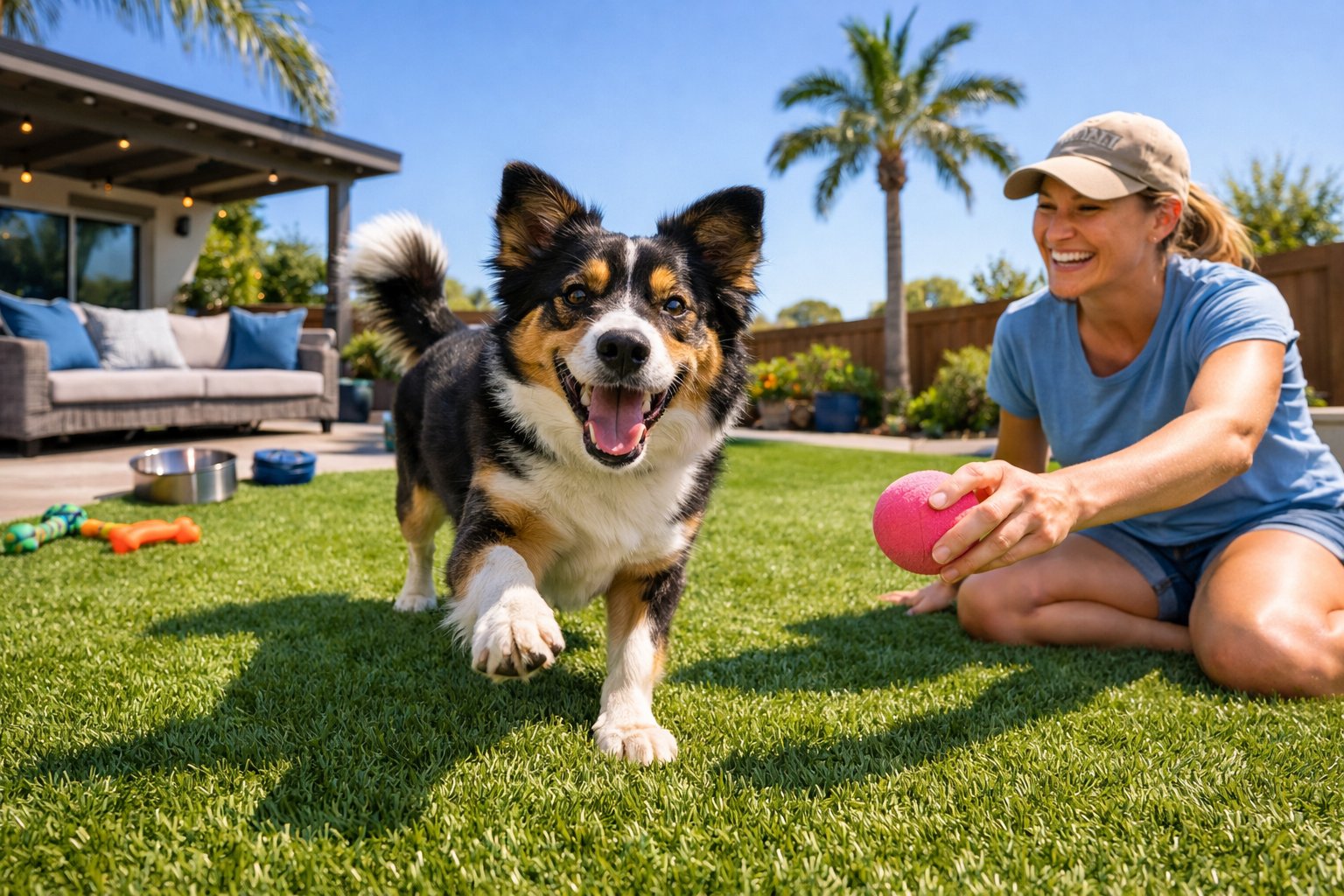
Artificial turf is honestly a lifesaver for a lot of dog owners. It wipes out muddy paw prints, cuts way down on chores, and keeps your outdoor space cleaner for both you and your pets.
Low Maintenance and Easy Cleaning
No more mowing, watering, or trying to patch up dead spots. You’ll save hours every week and your water bill will thank you.
Turf stays green all year, no fertilizer or pesticides needed. Even if your dog’s a maniac, the yard still looks good.
Cleaning is simple:
- Just hose down the spots where your dog does their business
- Hit it with a pet-safe cleaner every so often for a deeper clean
- Drainage keeps the turf dry and ready for play
With perforated backing, urine and rainwater drain right through, no gross puddles, and no yellow spots. If you keep up with a little maintenance, odors aren’t a big issue.
Health and Safety for Dogs
One of the best perks? No more worrying about lawn chemicals. You’re not using fertilizers, weed killers, or pesticides, so your dog’s paws and stomach are safer.
The turf also keeps your dog from digging holes or munching on grass, so, fewer upset tummies and less mud tracked inside. And with built-in antimicrobial properties, the surface stays more hygienic than natural grass, which is especially nice if your dog’s got a favorite bathroom spot. The material’s non-toxic, too, so it’s safe for dogs that like to lounge or roll around.
Pest and Allergy Reduction
Natural grass is basically a magnet for fleas, ticks, and other nasties. Artificial turf takes away their habitat, they’ve got nowhere to hide or breed.
You’ll see fewer bugs overall, which means less risk of your dog bringing in pests. Plus, synthetic turf doesn’t make pollen and drains fast, so you don’t get mold or dust building up. If your dog’s got allergies, you might notice a big improvement after switching.
Customizing Pet Turf Systems for Your Space
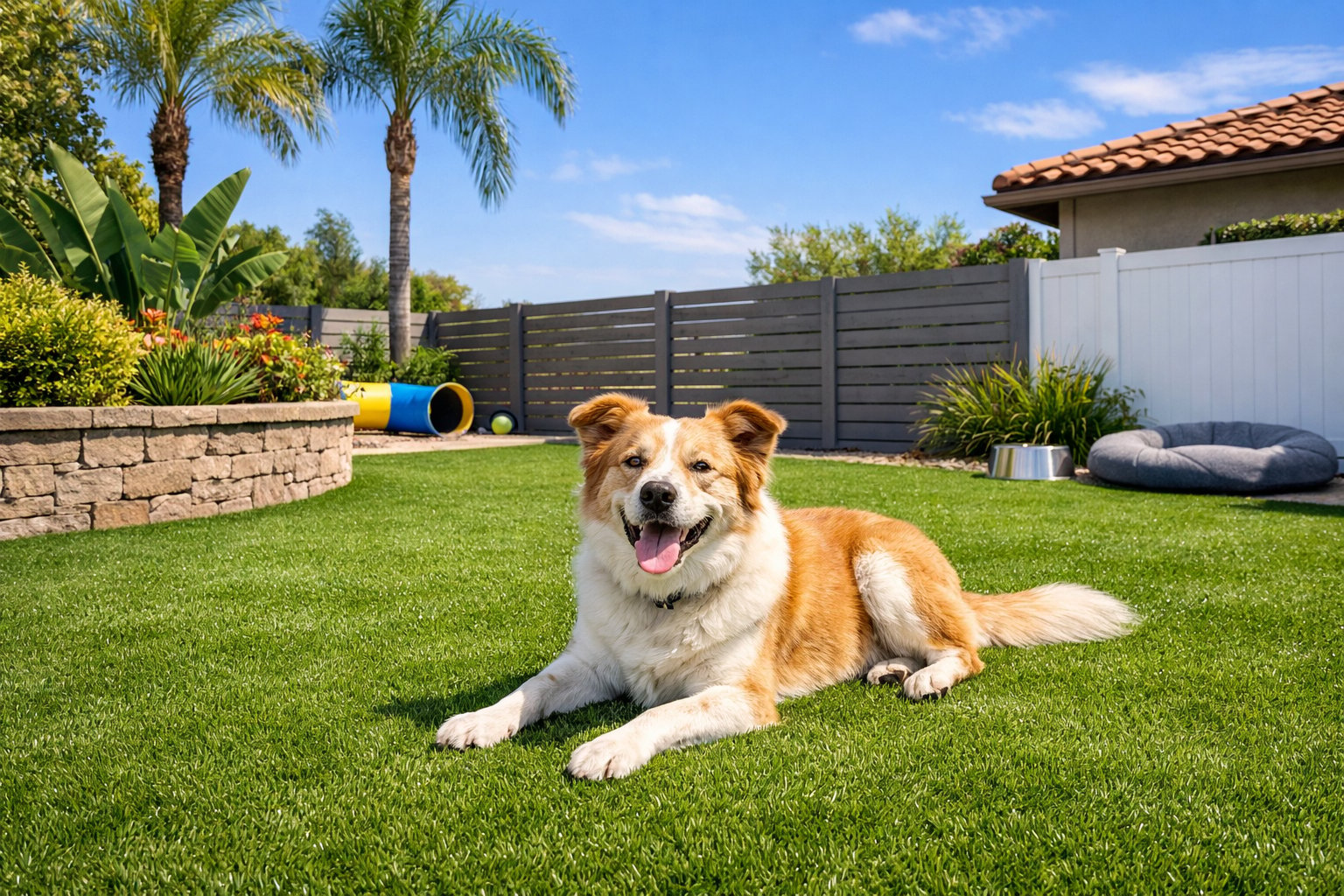
Not all pet turf is created equal, and what works for a tiny dog isn’t going to cut it for a Great Dane. You’ll want to match the turf, infill, and design to your dog’s size and energy level and how you actually use your yard.
Choosing Turf Based on Dog Size and Activity
Bigger dogs and high-energy breeds need heavier turf, think 60-90 ounces per square yard. It costs a bit more, but it’ll hold up way better. If you’ve got small dogs, you can get away with lighter turf (40-60 ounces), unless you’ve got a pack or they’re outside a lot, in which case, just go with the heavier option anyway.
Pile height matters, too. Shorter piles (1-1.5 inches) are easier to clean and handle heavy traffic. Long piles feel softer but trap more gunk, your call, but most people with active dogs stick to the short stuff.
Selecting Infill and Backing Types
Infill Materials for Dogs:
- ZeoFill: Soaks up odors naturally
- Envirofill: Has antimicrobial protection to fight bacteria
- T°Cool: Helps keep turf cool in the heat
- Silica sand: Cheap, but doesn’t do much for odor
Fully permeable backing is the way to go, it drains up to 1,200 inches per hour, which is wild compared to the 30 inches you get from hole-punched backings. The better the drainage, the less you’ll deal with smells.
If your dogs always go in the same spot, antimicrobial backing helps keep bacteria from building up between the turf and the base. Definitely worth it if you want to keep things fresher for longer.
One last tip: even the best turf needs a little TLC. For deep cleaning and odor control, I’d recommend calling in a pro every so often. Go Greens Clean is a local favorite, they specialize in turf cleaning and can get your yard looking and smelling brand new. Worth it, especially if you’ve got more than one dog or a high-traffic yard.
Design Options for Yards, Runs, and Play Areas
If your dog roams the whole yard, full turf coverage is usually the way to go. Some folks like to keep natural grass in those cooler, shaded corners while putting pet-friendly turf in the sunniest, most trampled spots. It’s a bit of a balancing act, honestly.
For dog runs, turf should go wall-to-wall with enough slope for water to drain off, think a 2-4% grade toward a drain or collection spot. Outlining the run with non-toxic plants or some hardscaping gives it definition and keeps things looking tidy.
Setting up a dedicated potty area with extra drainage underneath can make life easier. Mark these spots with a different infill color or maybe some unique landscaping features so your dog gets the hint. It’s a smart way to keep the rest of your turf looking fresh for longer.
Pet Turf Installation in San Diego
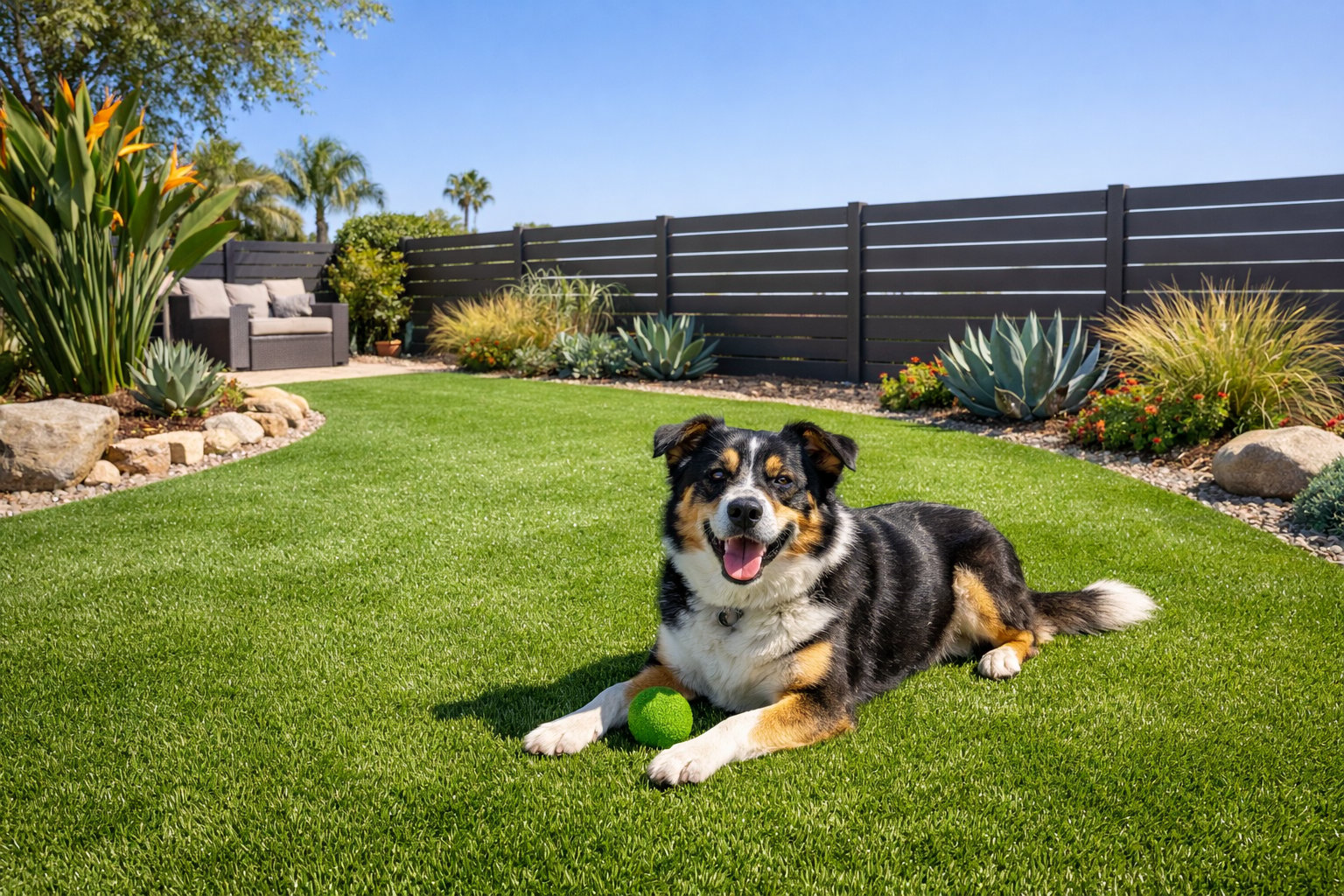
Installing artificial turf for pets isn’t just about rolling out some green carpet. There’s real planning involved if you want it to last. Knowing your options, the steps, and what it’ll cost can help you figure out what’s best for your yard, and your sanity.
Professional vs. DIY Installation
Professionals bring a lot to the table: they know how to prep the ground, handle drainage, and seam things up so you don’t get weird bumps or puddles. In San Diego, they’re familiar with the local soil quirks and how water moves after a rare rain. Most jobs are done in a couple days, and you’ll usually get a warranty.
DIY is definitely cheaper, maybe 30-50% less if you already have tools and a bit of know-how. But you’ll need a plate compactor, turf cutter, power broom, and a willingness to sweat. It’s a lot of physical work: digging, measuring, and making sure everything drains right.
Honestly, most people end up hiring pros for pet turf. If you go the DIY route, pay extra attention to getting that base and drainage right, otherwise, you’re in for odor and puddle headaches. And if you want to skip the hassle altogether, I’d recommend reaching out to a professional turf cleaning service to keep your turf looking and smelling its best.
Key Steps in the Installation Process
First step: out with the old. Remove existing grass and dig down about 3-4 inches. Then comes a base layer, crushed rock or decomposed granite, that helps with drainage and keeps things stable. This base gets compacted so it doesn’t settle weirdly later.
A weed barrier goes down to keep unwanted green stuff from popping up. Turf rolls are laid out, trimmed to fit, and nailed down along the edges. Where two rolls meet, adhesive tape and careful lining up keep the seams from standing out.
Infill is a big deal for pet turf, zeolite or antimicrobial options help control smells and keep the blades upright. The last step is brushing everything out so the infill spreads evenly and the turf looks natural.
Cost Factors and Value
In San Diego, you’re looking at $8-15 per square foot for pet-specific turf, covering materials, labor, prep, and infill. If you want top-notch antimicrobial backing and the best drainage, expect $12-18 per square foot. Not exactly pocket change, but you get what you pay for.
Your final price depends on:
- Yard size – Bigger projects usually mean a lower per-foot price
- Site prep – Rocky or uneven yards need more work (and cost more)
- Drainage – Slopes or bad soil might require extra drainage solutions
- Infill – Premium zeolite isn’t cheap
- Edging – Fancy borders or stonework add to the total
It’s a chunk of change up front, but you’ll save on water, fertilizer, and mowing. Most folks in San Diego save $1,200-2,000 a year, so it adds up pretty quickly.
Aftercare and Longevity
Pet turf does need some love, regular rinsing to wash away urine and debris. Grab a hose and spray down busy areas two or three times a week. Pick up solid waste right away and rinse the spot.
Once a month, break out a mild soap or enzyme cleaner made for turf. Brushing the fibers every few weeks helps keep them upright and soft, plus it moves the infill back where it belongs.
With a little effort, good pet turf lasts 15-20 years in San Diego’s sun. The fibers are UV-resistant, so fading isn’t much of an issue. You might need to add infill every couple years, especially if your dogs are on the energetic side.
How to Maintain and Care for Your Pet Turf
If you want your artificial turf to stay fresh and comfy for your dogs, you’ll need to keep up with some regular maintenance. A few minutes here and there, rinsing, brushing, and handling odors goes a long way. With the right routine, your turf can last anywhere from 15 to 25 years, give or take.
Routine Cleaning Methods
Start with a weekly hose-down, especially where your dogs like to do their business. Ten minutes is usually plenty and helps stop odors before they start.
Pick up solid waste right away with a scooper or compostable bag, then rinse the spot. It’s not glamorous, but it keeps things sanitary.
Once a week, brush your turf with a stiff broom or turf rake. Go against the grain to fluff up the blades and spread the infill around. That keeps things soft and prevents the dreaded matting in those high-traffic zones.
Monthly tasks:
- Check infill levels and top off if needed
- Vacuum up pet hair (it really piles up!)
- Test drainage by pouring water and checking for puddles
- Look for flat spots and brush them out
When it’s especially hot or dusty, bump up rinsing to three or four times a week. In fall, a leaf blower helps clear out debris that can clog drainage.
Dealing with Stains and Odors
After brushing, spray a pet-safe enzyme cleaner or a 50/50 mix of white vinegar and water on high-traffic areas. Let it sit for a few minutes, then rinse. Enzymes are your friend when it comes to breaking down urine smells.
Skip bleach or harsh chemicals, they’ll wreck your turf and could bother your dog’s paws.
Tough stains? Gently scrub with a soft brush and some mild dish soap in warm water, then rinse well. If odors just won’t quit, the infill might be saturated. Try rinsing more often, or consider a professional deep clean. Some turf comes with antimicrobial backing, which helps, but nothing beats a thorough cleaning now and then.
If you ever feel like the turf needs a reset, don’t hesitate to call in Go Greens Clean for deep cleaning pet turf and get your yard back to looking and smelling great. Sometimes, it’s just better to let the experts handle it.
Extending Turf Lifespan
Try trimming back any trees or bushes that hang over your artificial turf, less debris means less mess to clean up, and honestly, who wants to spend their weekend picking up soggy leaves? If you let stuff pile up, it just traps moisture and wears things out faster.
When it comes to tools, skip anything metal. Metal rakes or shovels? Not worth the risk, they can rip up the fibers or mess with the seams. For snow, stick to a plastic shovel, and for everything else, a soft-bristle broom works wonders. It might take a little longer, but your turf will thank you.
If you’ve got kids or pets, try switching up where they play every so often. Otherwise, you’ll notice certain spots getting matted down or worn out way before the rest. It’s kind of surprising how fast those high-traffic areas can look tired.
Key protection steps:
- Keep sharp stuff far away, seriously, it’s not worth the headache
- No hot grills or fire pits straight on the turf (unless you like melted grass?)
- Patch up any little tears or loose seams before they turn into bigger problems
- Book an annual inspection, catching drainage or infill issues early can save you a ton of hassle later
If you’ve chosen artificial grass made for pets, you’re already a step ahead. Those products usually have better drainage and tougher fibers, so you don’t have to baby them as much. Still, a little regular care goes a long way. And if you want your turf looking its best year after year, I’d absolutely recommend calling in a professional turf cleaning service like Go Greens Clean. They know all the tricks to keep your investment in top shape.